If he likes you, you’ll know. No dating advice has ever debunked the delusions of straight, single women quite so swiftly. I refer to it often, and wheel it out to friends whenever they’re agonizing over Hinge matches who’ve gone cold or situationships that’ve fizzled. So ubiquitous is the sentiment, with various iterations often going viral on social media, that I’d forgotten where I picked it up from. Then I rewatched He’s Just Not That Into You, the cult 2009 rom-com that informed the love lives of millennial women everywhere, including my own.
To understand this film, one must first revisit the single woman’s holy scriptures: Sex and the City. In Season 6, one of Carrie Bradshaw’s most hated boyfriends, Jack Berger, offers some post-date analysis to an anxious Miranda Hobbs, who can’t understand why the man she just went on a date with didn’t want to go back to her apartment. “He’s just not that into you,” deadpans Berger. “When a guy’s really into you, he’s coming upstairs.”
Such was the resonance of that SATC scene that it inspired a bestselling self-help book penned by two of the show’s writers, Greg Behrendt and Liz Tuccillo, from which the film was later adapted. In the film, we follow 20- and 30-somethings navigating the vagaries of romance, each variously looking the wrong way for love. Through interwoven plots, the film tackles common relationship dilemmas, from commitment issues and emotional unavailability to misread signals and cheating.
Now, nearly two decades later, we’re still clinging to the film’s central message. It’s a simple concept, but one that sparked a collective shift in mindset, debunking the litany of lies we tell ourselves to evade a brutal but plain-to-see truth. Because the man who barely makes himself available isn’t actually too busy with work. He’s not really still getting over his ex. He isn’t moving to Yemen, and he’s not even “just got a lot going on right now.” He just doesn’t fancy us enough to make the time. Eureka!
Of course, the only reason this particular strand of dating advice has barely wavered in popularity since 2009 (though we often hear its other iteration, “If he wanted to, he would”) is that cutting your losses is preferable to waiting around for a man to properly communicate when that may never happen. This isn’t ideal, obviously—it gives inarticulate men a way to circumvent their own shortcomings while women take on the emotional load. But that doesn’t mean it hasn’t proven somewhat useful, and saved a lot of time.
Nichola, 32, first saw the film as a teen, and it changed the way she approached dating. “Before the week was out, I’d ditched the boy who’d messed me around for over a year; I’d realized with sudden clarity that it was never going to change, because he was just not that into me,” she remembers. “Even now, I don’t accept crumbs from boys and have ended up in meaningful relationships with men who know how to communicate as a result.”
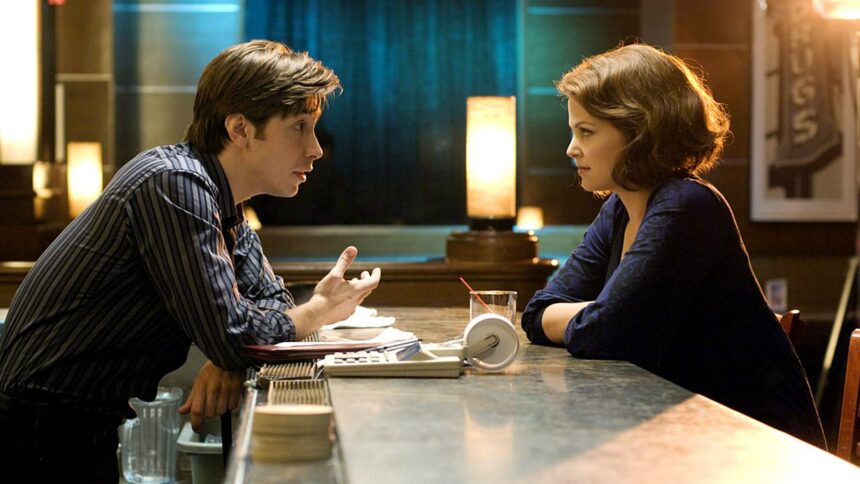
As a teenager, I learned the most from Ginnifer Goodwin’s character, Gigi, whose entire sense of self seems predicated on whether or not a man returns her calls. It gets to the point where she stares at an open flip phone during a yoga class, watches her landline while tapping her foot, and eventually attempts to stage a run-in at a local bar. She doesn’t simply want male validation; she needs it to breathe.
That is, until she meets Alex, an attractive, self-professed fuckboy who tells her, quite brutally, to stop waiting by the phone and move on from men who clearly aren’t interested in her. It’s good advice that my friends and I have ardently followed since, or at least tried to, knowing we’re worth more than the men who not only aren’t interested in us, but don’t even have the capacity to communicate that fact.