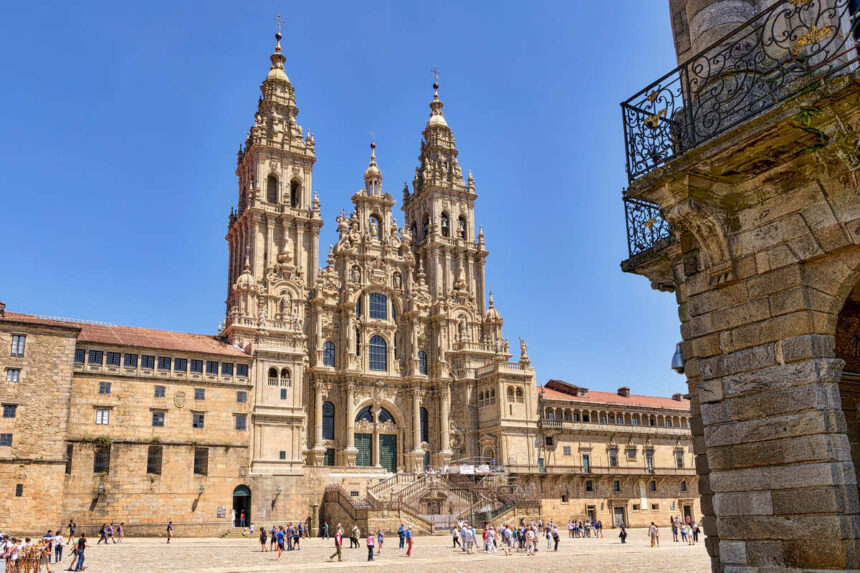
Forget Barcelona and Madrid: if you’ve been planning a culture-filled getaway to Spain this year, those are no longer your only two options for arrival airports.
It’s literally in our name, but if you’re anything like us, you’re anything but thrilled about the prospect of hitting up an overtouristed destination literally everyone has been to, with a hefty price tag that does not support the subpar hospitality, or even the blatant anti-American attitude.
No joke, tourists are being chased down the streets in Barcelona by angry locals shooting water pistols lately.
This year, we’re heading to the seriously overlooked northwest of Spain, and you should too: it’s home to one of the cheapest, most beautiful medieval cities in the country, and guess what? You can now fly there directly:
Forget The Hefty Price Tags
When most Americans think of Spain, it’s probably Barcelona’s Gaudí-designed cityscape and an arch-adorned Latin Quarter that come to mind, or perhaps Madrid’s royal palaces and stately Gran Vía.
They’re Spain’s two leading destinations, and when it comes to European city breaks, they cover all the bases and then some, from the historic appeal to the world-class museums to the delicious food. There’s just one caveat: they can be pricey as hell.
Renting a room in downtown Barcelona, within walking distance of the main landmarks and beaches, will set you back an average $216 a night, and it’s no different in Madrid, where 3-star hotels cost an estimated $183 to book.
Don’t get us started on the $10 sangrías and $15 reheated patatas bravas.
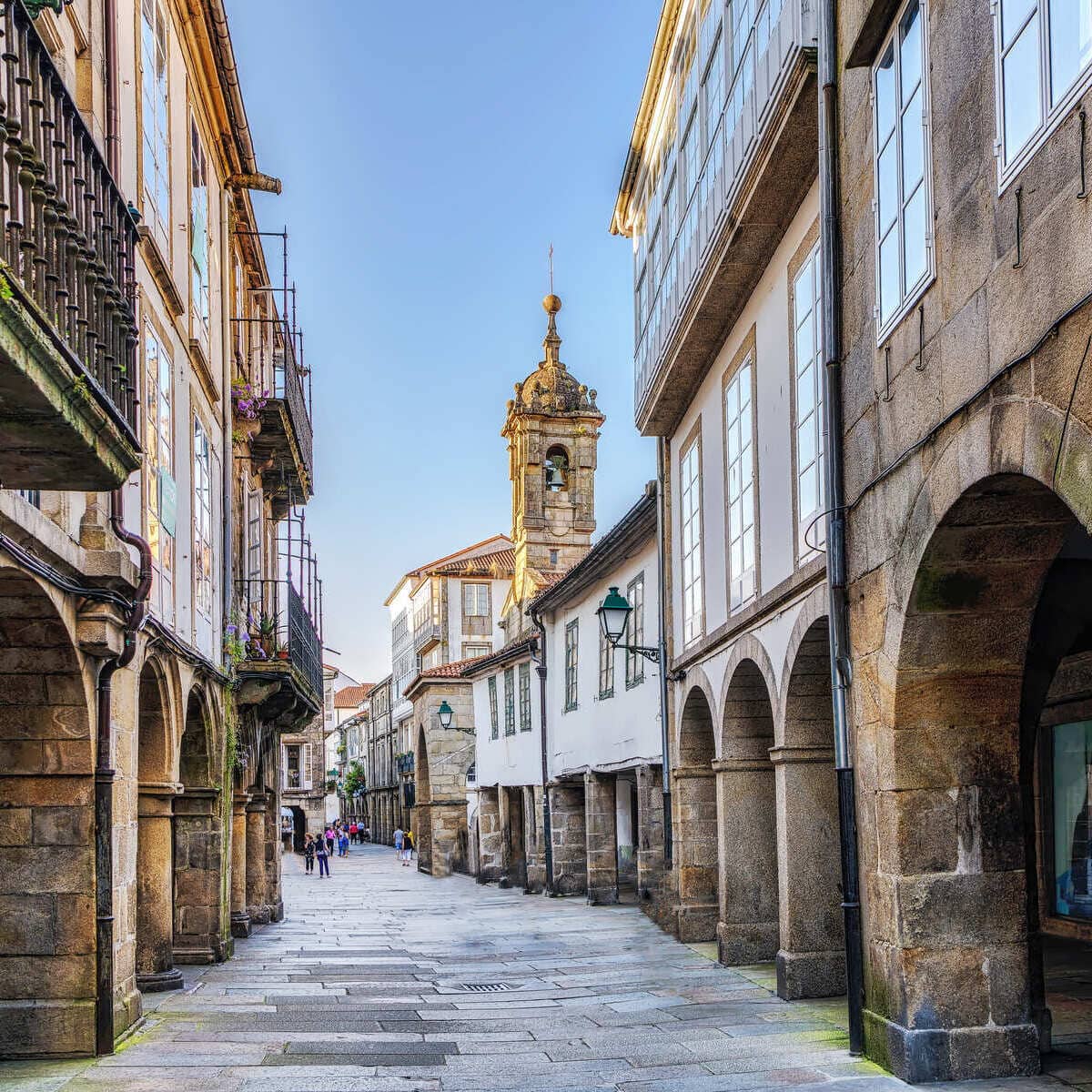
Tucked away in the northerly, historical region of Galicia, which straddles the Atlantic, not the Mediterranean, Santiago de Compostela is the complete opposite of Spain’s usual tourist dumps: still that squeaky-clean, picture-perfect medieval town, and it won’t make a single major dent on your wallet.
Spain’s Most Atmospheric Medieval Getaway
Santiago is best known as the endpoint of the Way of St. James, or, as it is known in Spanish, the Camino.
An emotional, weeks or months-long trek that takes Christian pilgrims through the heart of Iberia, all the way to Santiago Cathedral, it culminates with a descent to the edifice’s crypt, where the silver urn believed to contain the remains of James, one of the Twelve Apostles, is housed.
Needless to say, Santiago is not your typical Spanish hub for week-round partying, infested with stag-do Brits and beer-bellied German tourists en masse.
It’s not even on the coast, and even if it was, the North Atlantic’s tall waves and rugged shoreline are not exactly beach bum-friendly, so the half-wits won’t come anywhere near it.
That said, Santiago is packed full of pilgrims year-round, but the truth is, very few of them are lingering around for a chill city break after they’ve watched their evening mass and paid Saint James their respects.
In other words, it couldn’t be more underrated if it tried.
Not The Spain You Might Know
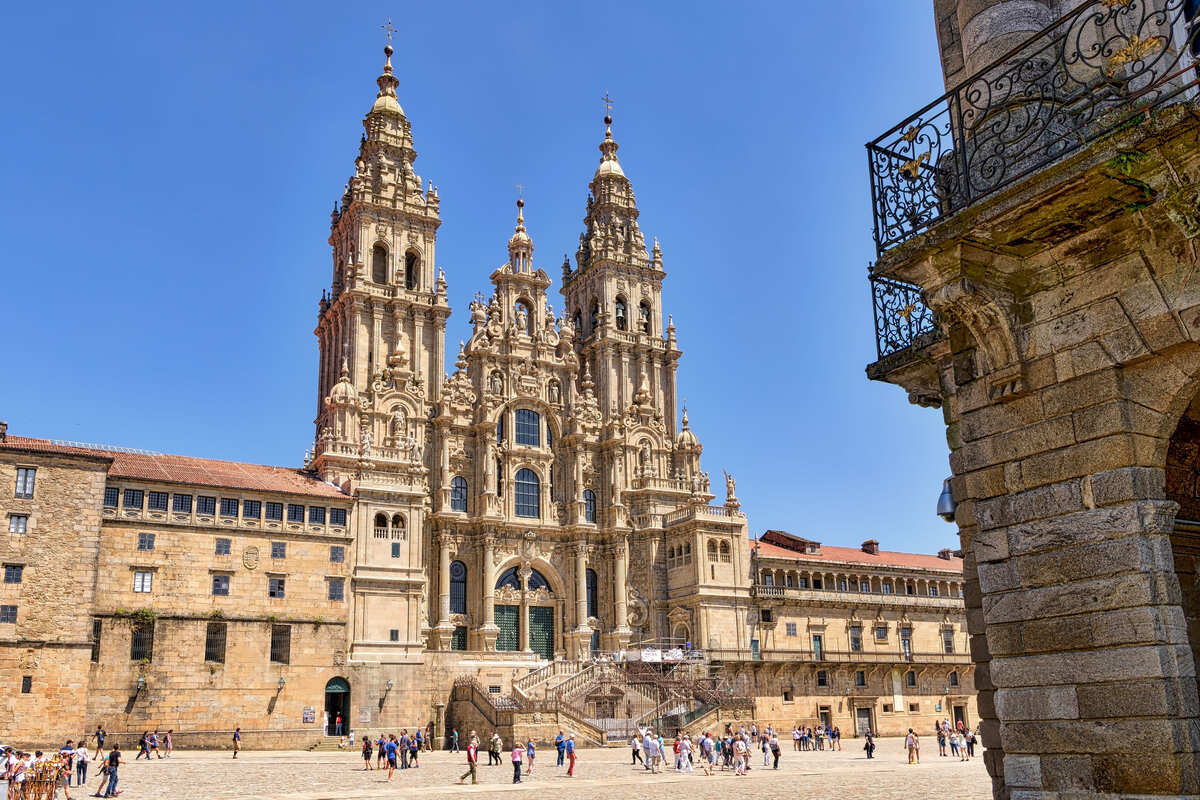
The cathedral’s the main attraction here, of course, with its soaring towers, fortress-like demeanor dominating the entire skyline, and richly sculpted main portal, but there’s a whole UNESCO-listed Casco Histórico surrounding it you don’t want to just briefly stroll through.
None of the usual pastel-hue townhouses with green shutters, palm-lined avenues, or Mediterranean flair. This is not that kind of Spain.
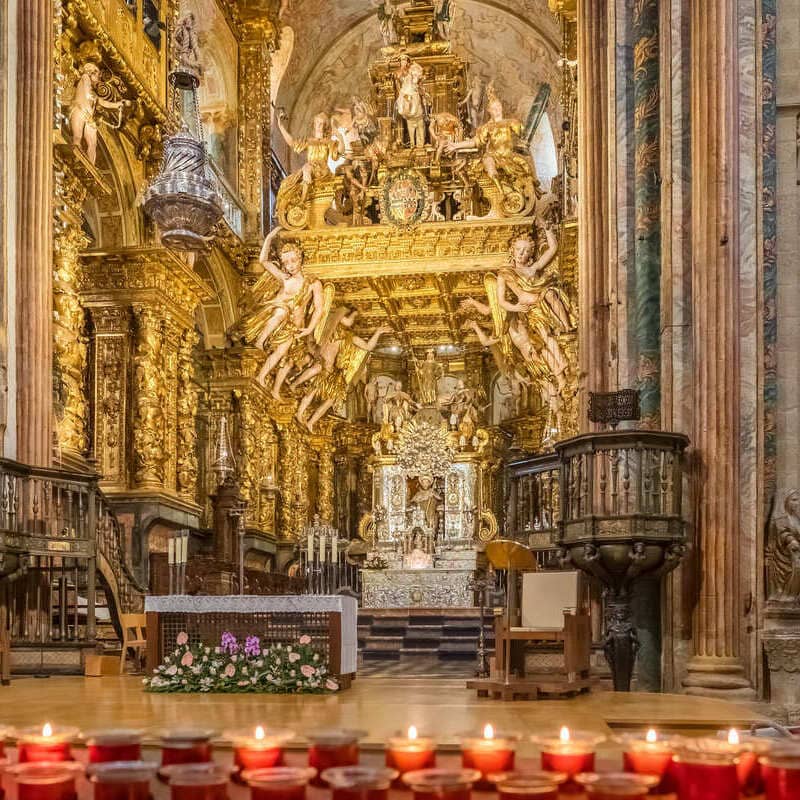
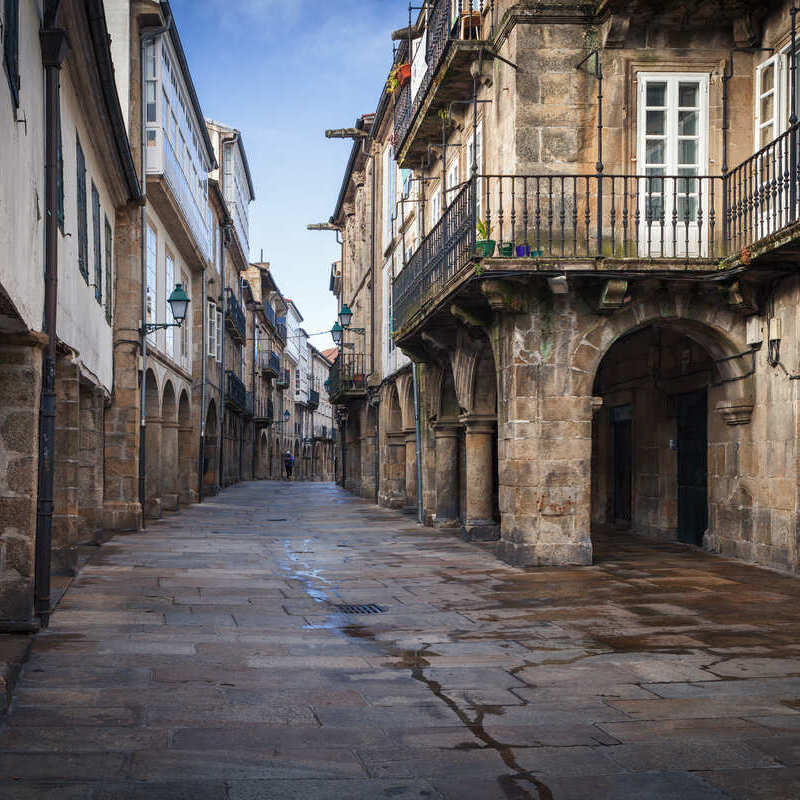
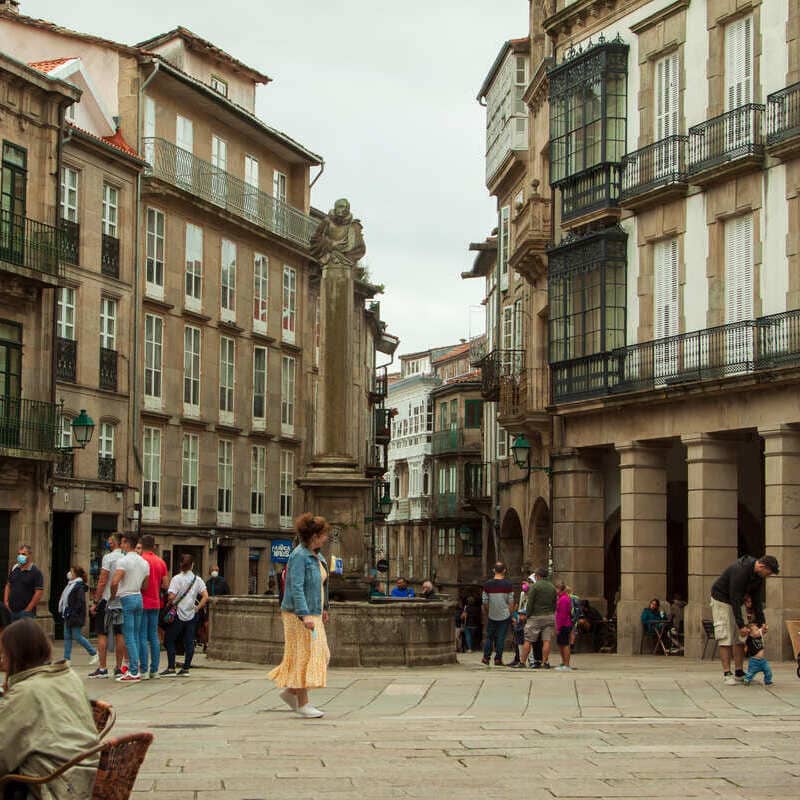
We’re talking pedestrianized streets lined by arcades, with laid-back tapas bars and jamón shops tucked behind the arches, a string of squares surrounded by medieval dark-brick buildings with glassed-in balconies, and Baroque churches with lavish interiors.
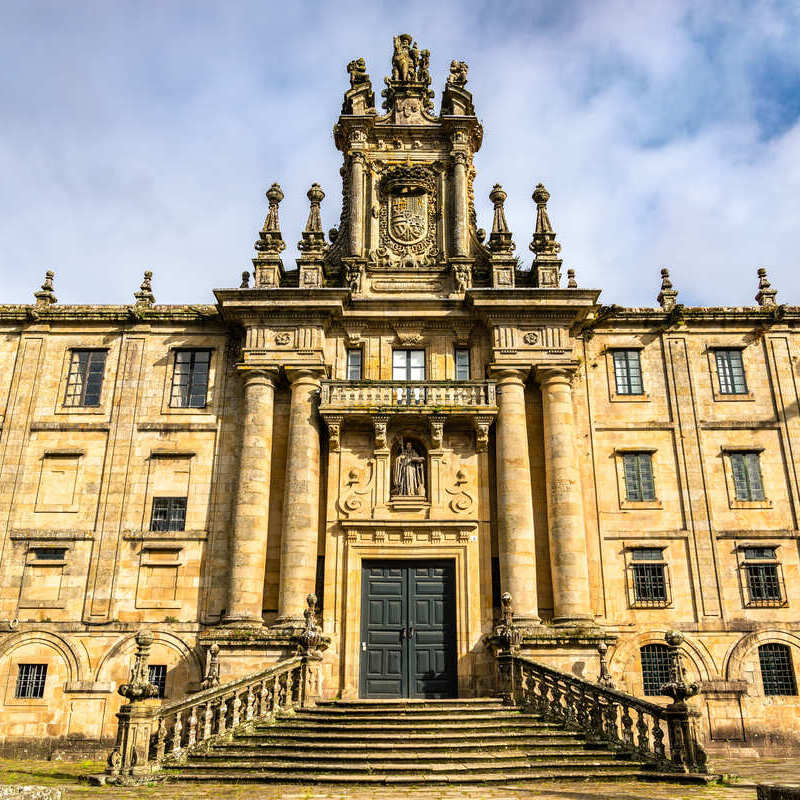
Right beside the cathedral, and ignored by most day-trippers, the San Martiño Pinario Monastery features a monumental church with a gold-clad altar, and a processional cloister with a romantic fountain in the middle.
The whole point of visiting Santiago is slowing it down, breathing in the ancient allure of the Old Town prazas, and jumping from bar to bar.
If you can’t be bothered with the stench and chaos of a street market, Cabalo Branco is your top spot in Centro for trying Galicia’s signature polbo á feira, a paprika-sprinkled, chopped-up octopus served in a plancha with baked potatoes.
For those fresh scallops that will pair beautifully with the region’s flagship white Albariño wine, hit up the secretive Entre Rúas, a no-frills eatery hidden at the crossroads of Santiago’s two narrowest alleys, between Rúa do Vilar and Rúa Nova.
How Actually Cheap Is Santiago?
Cathedral? Stunning. Old Town? Timeless. Food? Mouth-watering. What about prices?
This is where it gets interesting: for a culture-loaded city that punches way above its weight, Santiago does not operate under the same price-gouging rules as its flashier Spanish counterparts.
Any sit-down meal—Spanish omelettes, a plate of chorizo for sharers, and cerveza—in a tapas bar behind those centuries-old arcades will cost you $18–21, while an Old Town pension stay with breakfast will run you up from $65 to $99 a night.
For Spain? In the lead-up to peak season? That all sounds like a steal of a deal already, but let’s see exactly how Spain’s 5 main tourist destinations compare to Santiago:
*Averages drawn from Budget Your Trip and Numbeo
Fly Nonstop To Santiago de Compostela (SCQ) From The U.S.


From May 27, 2026, you’ll be able to fly direct to Santiago de Compostela (SCQ) from Newark (EWR), thanks to United’s new nonstop Transatlantic route to the Galician capital.
No need to touch down first in Madrid or Barcelona, which are way out east, then travel back westward to Santiago.
Flights will operate three times weekly, on Sundays, Wednesdays, and Fridays, and round-trip fares average $1,000–$1,100.
See Galicia Beyond Santiago
Don’t just stay in Santiago de Compostela! Galicia is one of Spain’s most beautiful coastal regions, with unruffled beaches stretching for miles on end along the Atlantic, vibrant port cities with a rich Roman heritage, and old villages frozen in time.


The capital is well-connected by rail and bus lines to other culturally-significant cities in Galicia, like:
- Vigo, the largest city in the region, and a bustling maritime port
- Pontevedra, a ‘mini Santiago’, best known for its medieval prazas and Camino highlights
- Combarro, a small Galician village with medieval granaries built on stone stilts along the beach
- A Coruña, the leading Galician seaside retreat, home to sandy beaches and a landmark Ancient Roman lighthouse
- Lugo, an inland town surrounded by perfectly-preserved Roman-era walls
- Fisterra, a scenic hike across coastal cliffs leading to one of the westernmost lighthouses in Spain. ‘End of World’ vibes through and through.