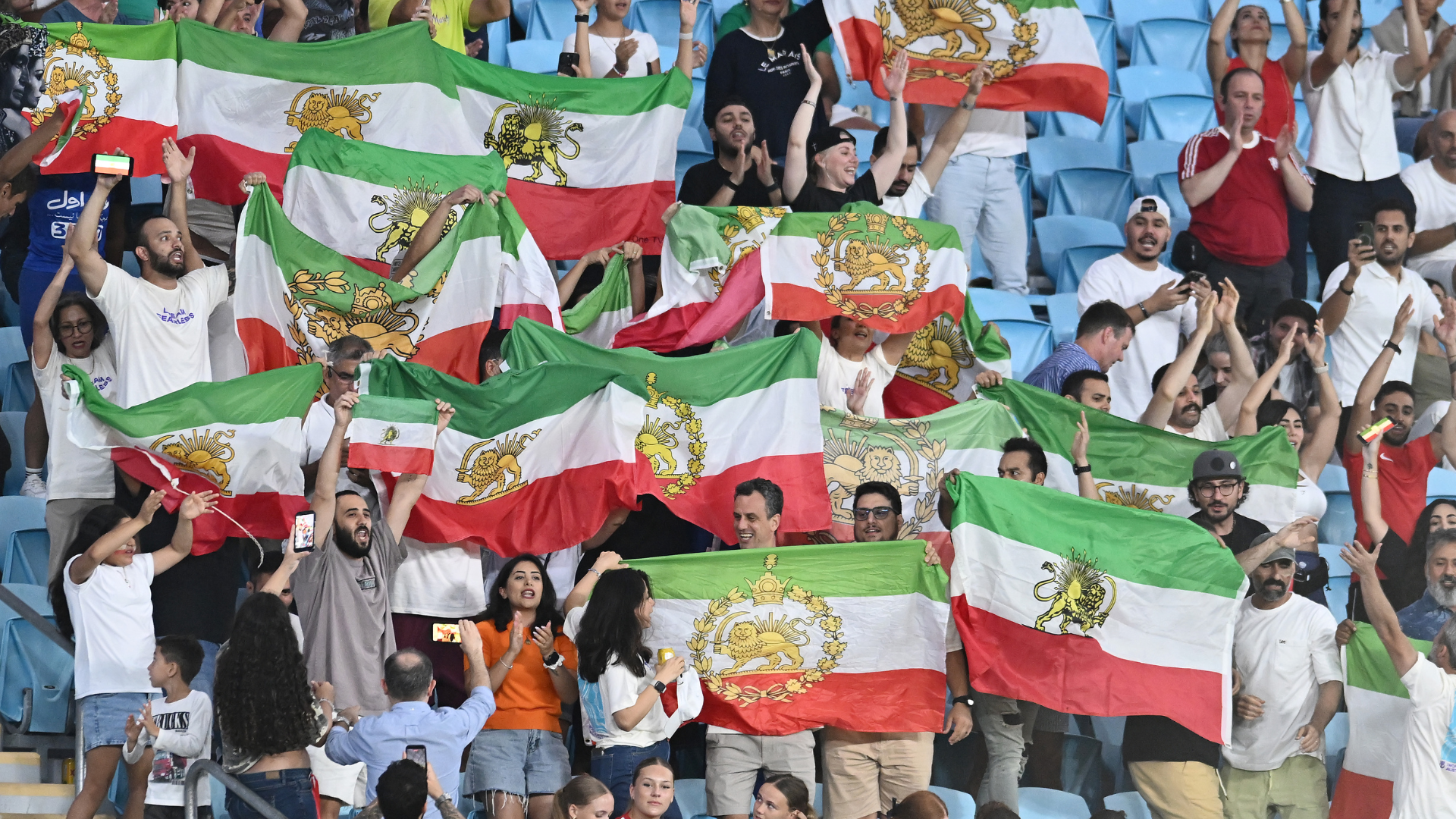
The Australian government granted asylum on Tuesday to five members of Iran’s women’s national team, a day after the group defected following the team’s participation at the AFC Women’s Asian Cup.
The players defected after Sunday’s 2-0 defeat to the Philippines, which ensured the team would be eliminated in the group stage. They were originally scheduled to leave Gold Coast, Australia, with their teammates but early Tuesday, local police officers transported those players from a hotel to a safe location after they made asylum requests. They then met with Australia’s minister for home affairs, Tony Burke, and the process for their humanitarian visas was completed.
According to the Australian government, the players are willing to have their names and pictures published but their names have not been shared officially at this time.
“I don’t want to begin to imagine how difficult that decision is for each of the individual women, but certainly last night it was joy, it was relief,” Burke said. “People were very excited about embarking on a life in Australia.”
The Iran War, which began after the team arrived in Australia, had loomed large over the team’s time at the Asian Cup. Players did not sing the national anthem ahead of their 3-0 defeat to South Korea in their opening match on March 2, two days after the U.S. and Israel’s joint military operation started, leading state TV to brand the players as “wartime traitors.” The players then sang the anthem and performed a military salute in their subsequent matches against Australia and the Philippines, both defeats.
“They wanted to make clear they are not political activists,” Burke said. “They’re athletes who want to be safe and are very grateful that Australia is making that opportunity for them.”
The players’ defection caught attention in Autralia and globally, with U.S. president Donald Trump addressing the matter on Monday. Trump said he spoke to Australia prime minister Anthony Albanese about the topic, writing on social media that five players “have already been taken care of, and the rest are on their way” while admitting the situation is “rather delicate.” Earlier that day, he said the U.S. would accept the players’ asylum applications if Australia would not.
It is currently unclear how many remaining members, if any, of the team remain in Australia. Burke told local media that other members of Iran’s team had sought asylum in the country but offered no further specifics. An Iranian delegation eventually departed Gold Coast for Sydney on Tuesday and then reportedly boarded a flight to Kuala Lumpur, Malaysia. It is unknown when or how the team will return to Iran, since the country’s airspace is closed because of the war but coach Marziyeh Jafari said Sunday that the group “want to come back to Iran as soon as we can.”
The safety of the remaining players is still a top concern for the sport’s governing bodies, as well as the Australian government.
“The safety and security of IR Iran’s women’s national team are FIFA’s priority,” FIFA said in a statement to CBS Sports on Monday, “and we therefore remain in close contact with the AFC and the relevant Australian authorities, including Football Australia, in relation to the team’s situation.”
Beau Busch, president of the Asia/Oceania division of global players’ union FIFPRO, said in a media briefing on Monday in Sydney that they have been unable to get in touch with players, only raising concerns about their safety.
“Our responsibility now is to continue to work as hard as we can on the AFC, FIFA and also the Australian government, to ensure that every bit of pressure is applied to make sure that the players are safe, that they have some agency around what happens next, whether they’re able to stay here in Australia, or if they do want to return, we do that safely,” Busch said. “We’ve continued to be in touch with FIFA, the AFC, the Australian government as well too. Also, through a range of human rights groups as well too.
“We’ve been able to understand the situation more fully in the country as well. The reality, at the moment, is that we’re unable to get in touch with the players. That’s incredibly concerning. That’s not a new thing that’s really been since the repression really dialed up in January and February. So we’re really concerned about the players, but our responsibility right now is to do everything within our power to try and make sure that they’re safe.
“There may be players that want to return. There may be some players within the group that would like to seek asylum, would like to stay in Australia for longer. There may be some that are incredibly concerned about the potential journey home. It’s an incredibly difficult situation, so our work with the government has been right now making sure that they do everything within their power to give the players a degree of agency.”