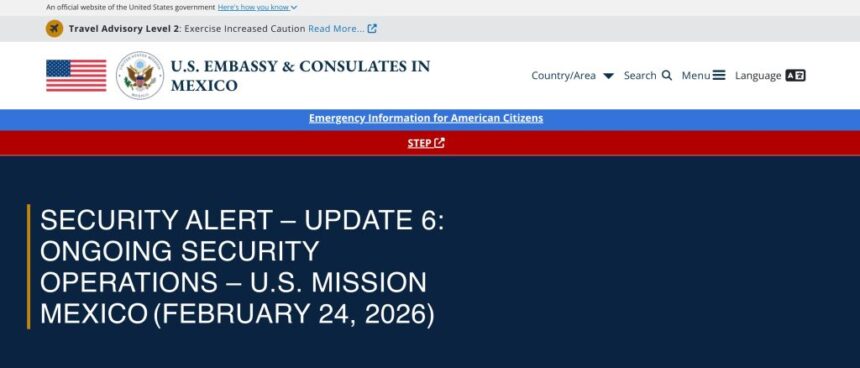
After 48 hours of viral videos, flight cancellations, and mounting anxiety over a U.S. Embassy security alert, conditions in Mexico’s key tourist destinations are stabilizing. Authorities say the unrest triggered by the killing of a major cartel leader has largely subsided, though security remains heightened in parts of the country.
The violence erupted Sunday following the reported killing of Nemesio Oseguera Cervantes, known as “El Mencho,” the head of the Jalisco New Generation Cartel (CJNG), in Jalisco state.
According to news reports, the operation sparked retaliatory roadblocks, fires and gunfights, particularly in Guadalajara and surrounding areas. Mexican officials said at least 70 suspected cartel members were arrested and 34 killed, while 25 National Guard members died in the clashes.
By Tuesday, however, the U.S. Mission to Mexico had lifted “shelter in place” advisories for Guadalajara, Puerto Vallarta and Ciudad Guzmán. In a security alert update, the embassy noted that “flight schedules have returned to normal” and “there are no reports of road closures.”
Puerto Vallarta and Guadalajara: Disruptions Ease, Security Tightens
The epicenter of the unrest was Jalisco, home to both Guadalajara and the beach destination of Puerto Vallarta. Flights were temporarily suspended at Licenciado Gustavo Díaz Ordaz International Airport (PVR), stranding travelers.
As of Tuesday, major carriers including United Airlines and Air Canada resumed service. Nearly 10,000 Mexican troops have been deployed to stabilize the region, according to the Mexican government.
President Claudia Sheinbaum said Monday that “the country is at peace,” emphasizing that federal forces are maintaining order.
Security analysts remain cautious. Kent Webber, a former Pentagon officer and senior manager at Global Rescue, told The New York Times: “No travel to Mexico is ever risk-free. The environment can shift quickly when senior cartel figures are killed or captured.”
While tourist zones are typically insulated from cartel violence, experts note that fragmentation within criminal organizations can increase unpredictability.
Cancun and the Mexican Caribbean: Operations Normal
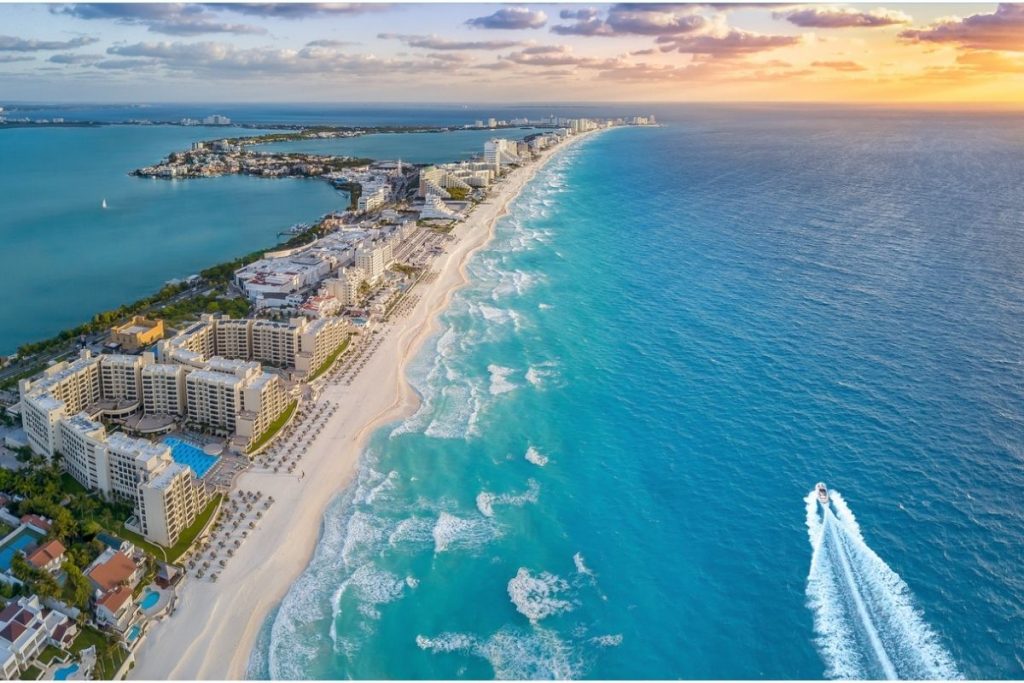
Initial confusion spread to Cancun and Playa del Carmen after broad diplomatic language included parts of Mexico under temporary precautionary measures. However, the U.S. State Department’s Mexico Travel Advisory page confirms that Quintana Roo remains under a Level 2 advisory — “exercise increased caution” — consistent with prior guidance.
There were no confirmed reports of violence affecting resort areas in Cancun, Cozumel or Tulum. Tourism officials in Quintana Roo reported normal airport and hotel operations throughout the period.
Security experts point out that Cancun is more than 1,200 miles from Puerto Vallarta, separated by geography and cartel territory. As Robert J. Bunker, director of research at C/O Futures, told the Times, “I wouldn’t cancel a spring break trip to Cancún,” though he advised monitoring official advisories.
Los Cabos and Baja California Sur: No Direct Impact
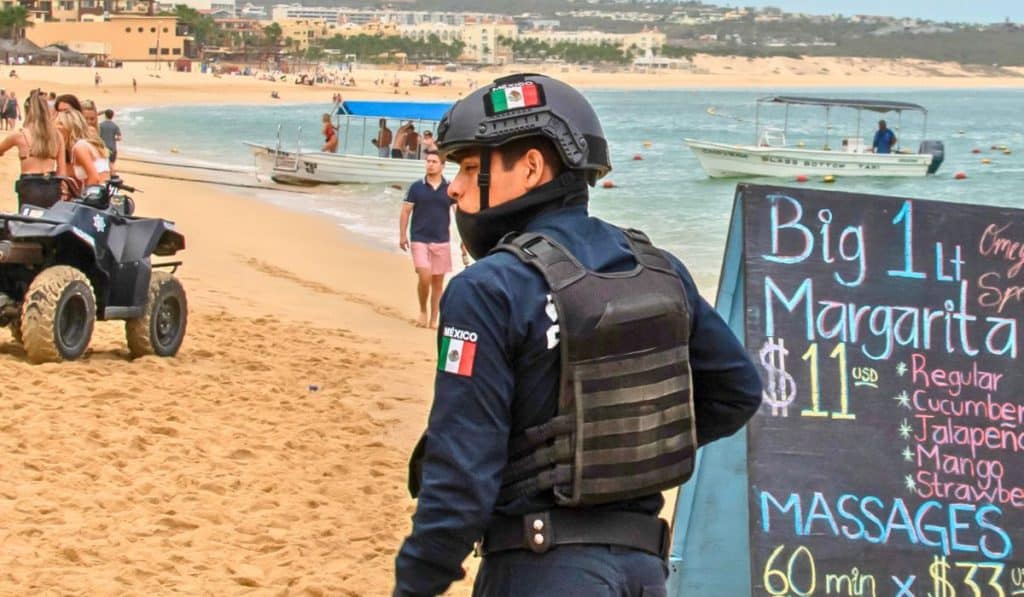
Some travelers mistakenly believed Los Cabos was affected after the embassy referenced “Baja California.” However, the alert applied to the northern border state of Baja California, not Baja California Sur, where Cabo San Lucas is located.
The U.S. State Department continues to list Baja California Sur under Level 2 precautions. No shelter-in-place orders were issued for Los Cabos.
Mike Ballard, director of intelligence at Global Guardian, told the Times that Cabo San Lucas is a destination he would “comfortably advise clients to visit now,” while stressing the importance of monitoring developments.
What Travelers Should Know
The U.S. State Department advises travelers to:
- Monitor the official Mexico Travel Advisory page
- Enroll in the Smart Traveler Enrollment Program (STEP)
- Use authorized transportation arranged by hotels
- Review travel insurance coverage, especially “Cancel for Any Reason” policies
Security conditions in Mexico vary significantly by state. While Jalisco experienced acute unrest, other popular destinations — including Mexico City, Cancun and Los Cabos — have remained operational.
The broader takeaway: Localized cartel violence in western Mexico disrupted travel temporarily, but major tourist hubs outside Jalisco are functioning normally. Travelers are urged to rely on official government advisories and verified reporting rather than social media speculation.