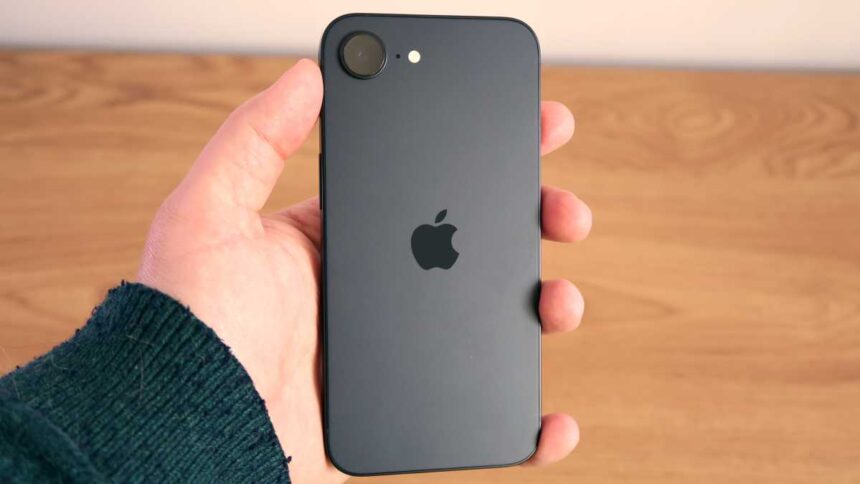
Apple’s affordable iPhone is expected to make a comeback between now and early March. Apple has confirmed it will hold an event, or rather three events, in three cities, at the same time on 4 March.
It’s believed this will have a different set-up from the usual Apple event, possibly without a traditional keynote and with new products announced through press releases earlier in the week. Somewhere in that mix, we can expect the new iPhone 17e to make its debut.
The iPhone 17e might not look like a monster on paper, and it isn’t supposed to be. It’s the iPhone most people actually need. There are three simple reasons why.
First, it’s not going to cost a bomb. It’s not exactly budget, but it’s still cheap in the iPhone world. We’ve normalised paying over a grand for a phone, but most people are probably better off with something solid and affordable.
Second, there’s the hardware. If the rumours are true, you’re getting a powerful A19 chip and decent cameras.
Third, and probably the most important change this year, is MagSafe charging. If you’ve used an iPhone before, you already know how much that matters.
Foundry | Alex Walker-Todd
iPhone 17e has the features that matter
The US and UK markets are not exactly spoiled for choice in the mid-range segment, although we’ve found a number of excellent phones in this price range that we’d recommend.
The UK has started to see more options from brands like Xiaomi, Honor, and Poco, but the overall competition still feels thin compared to markets such as China. In that context, the iPhone 17e lands in a fairly strategic spot. It sits in a price bracket Apple has usually treated as an afterthought.
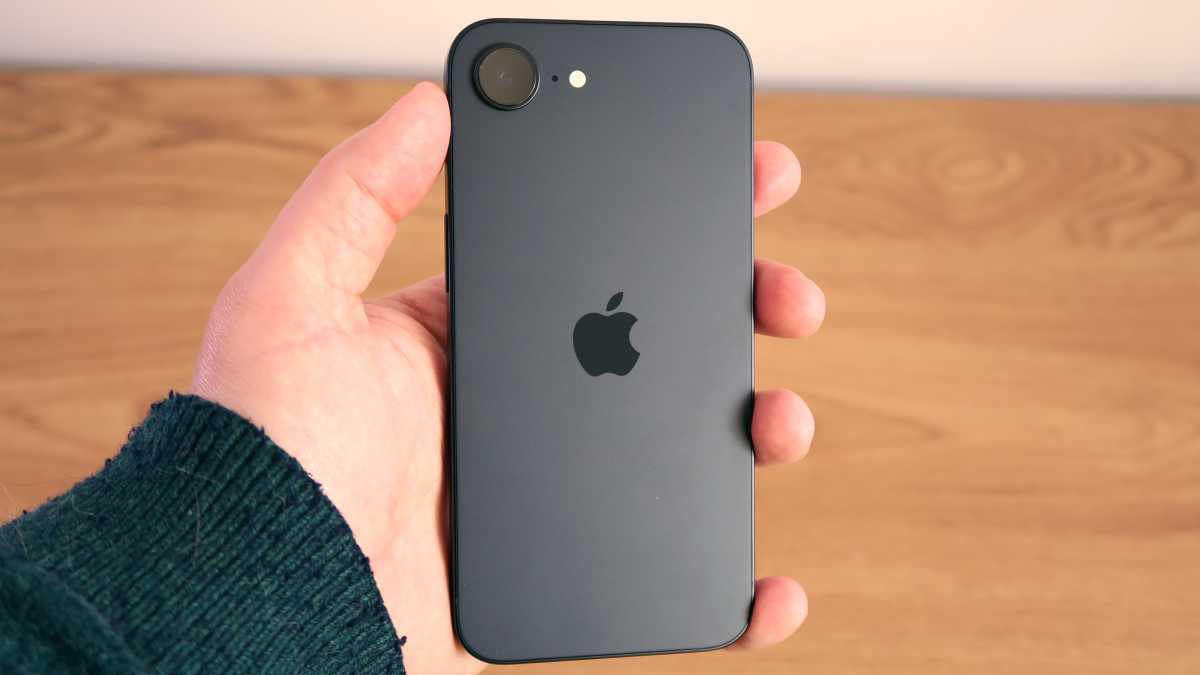
To understand why the iPhone 17e could make sense, you have to look at what’s around it. At $599, the iPhone 16e was a compromise. The internals were fine, but it missed a few things that made it feel truly current. It lacked MagSafe, featured an outdated design, and didn’t offer enough separation from older models to obviously justify its price.
When I tested the 16e, the lack of MagSafe was one of its major shortcomings
If early reports hold up, the iPhone 17e tightens things up. It’s expected to move to an A19 chip, even if it’s a slightly cut-down version. Add 8GB of RAM for Apple Intelligence features and, at the very least, you’re looking at better long-term headroom.
The biggest upgrade, though, is MagSafe charging, which is a genuinely useful feature. When I tested the 16e, the lack of MagSafe was one of its major shortcomings. It’s not only about wireless charging, but also about access to the mounts, wallets and chargers that many of us already use. The iPhone 17e will likely support 25W MagSafe wireless charging.
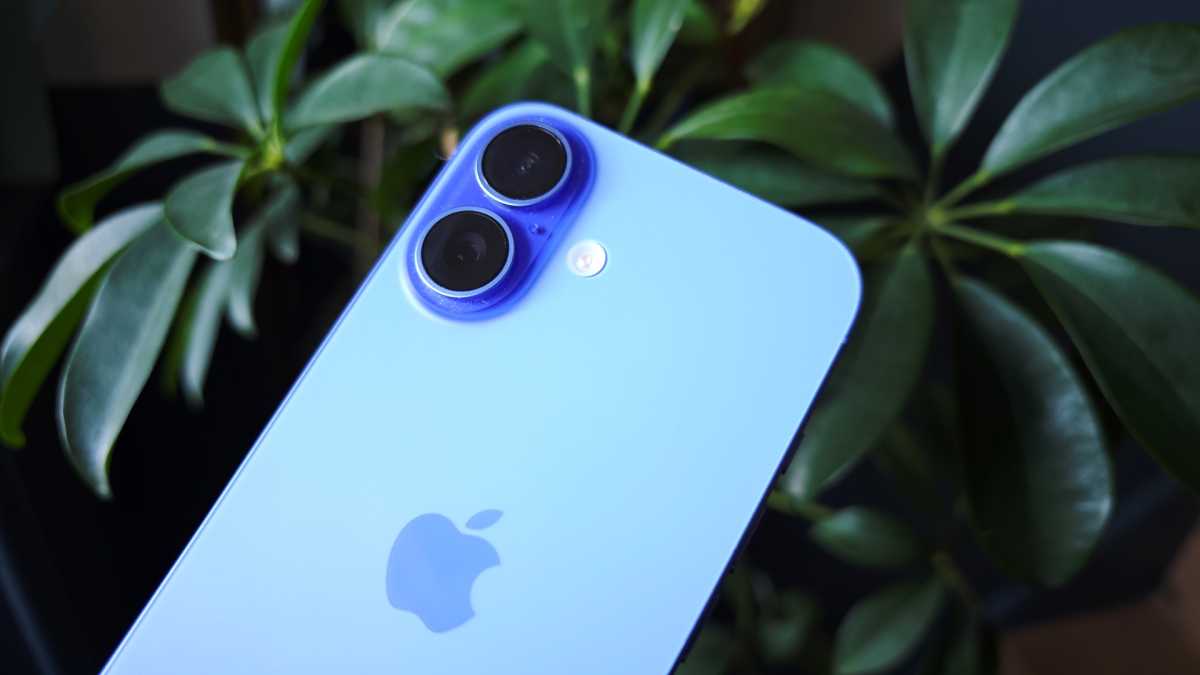
Then there’s the iPhone 16. According to Counterpoint Research, it was the best-selling iPhone of 2025, which is not surprising. But in 2026, paying $699 for a phone with an older-generation chip starts to look questionable, especially if the iPhone 17e comes in at $599 with newer silicon and broadly similar everyday performance.
Chris Martin / Foundry
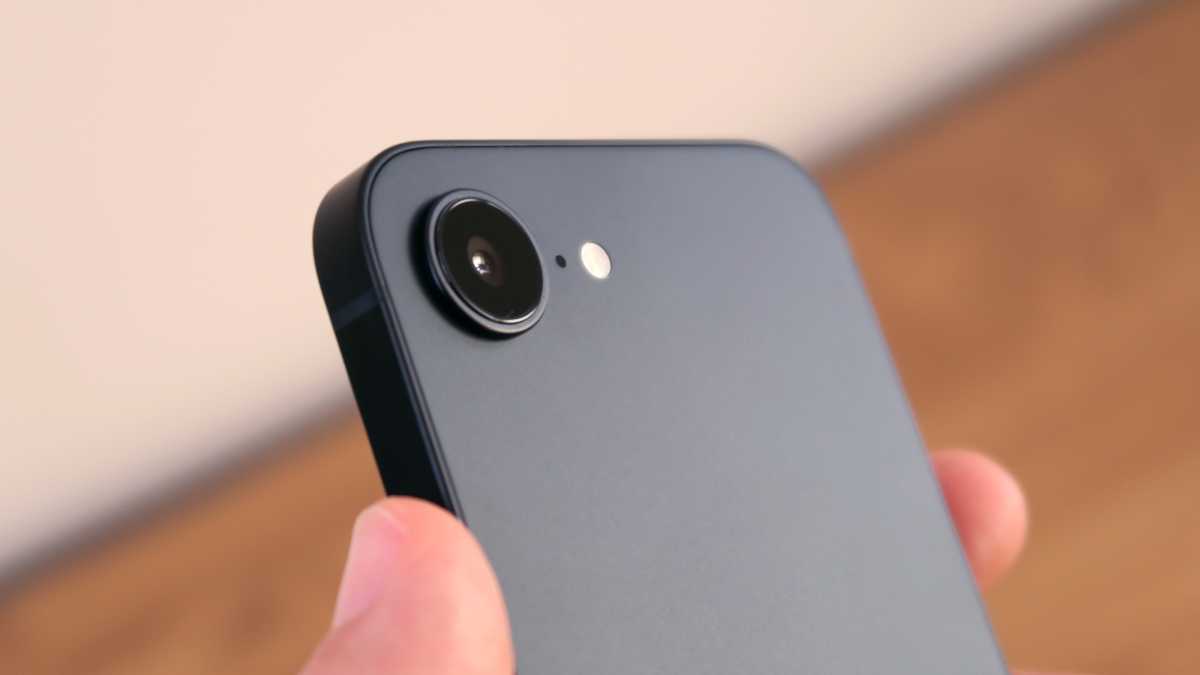
Yes, the iPhone 16 still offers a dual-camera setup and may feel a bit more premium on paper. But for most people, the difference between one good main camera and two isn’t life-changing.
Things like messaging, scrolling, video calls, and casual photos will feel roughly the same. The bigger difference over time will likely be how long the newer chip stays smooth and how well it supports future software features.
Foundry | Alex Walker-Todd
If you’re buying new in 2026 and aren’t specifically chasing flagship extras, choosing the newer processor at a lower price simply makes more sense.
It could be a better choice than the Pixel 10a
While Apple might announce the iPhone 17e in March, Google’s Pixel 10a is already available for pre-order, but you might want to wait. On paper, the Google Pixel 10a looks like the smarter buy. It’s cheaper, offers a 120Hz display, packs a bigger battery, supports faster wired charging, and stays very close to flagship territory for under $500.
Apple’s A19 chip, built on a 3nm process, is almost certain to outperform the Tensor G4
If I say the Apple iPhone 17e might be the better choice, it may sound as though I’m biased in favour of Apple, but hear me out. Once you move beyond the raw spec sheet and think about long-term ownership, the iPhone 17e starts to emerge as the better choice.
Apple’s A19 chip, built on a 3nm process, is almost certain to outperform the Tensor G4 in sustained CPU and GPU workloads. That matters if you plan to keep your phone for four or five years. It also matters if you game, edit video, or simply want a device that will still feel fast long after the launch-year hype fades. Apple’s silicon track record suggests the 17e will age better from a pure performance standpoint.
The Tensor G4 has improved significantly compared to previous generations, but it still runs warm and experiences noticeable thermal throttling under heavy or sustained workloads. While it stays cooler during everyday use, it can lose up to 50-60% of its performance during intense tasks.

Foundry | Alex Walker-Todd
Price, however, is where this either works or falls apart. The Apple iPhone 16e launched at £599/$599. Earlier projections suggested the 17e could jump to £650/$650, possibly due to OLED panel costs and broader component pricing pressures.
But a recent report from Mark Gurman indicates that Apple may hold the line at £599/$599 for the 128GB base model, with some leaks even hinting that 256GB could become the new entry tier.
iPhone 17e seems promising
Apple still hasn’t confirmed anything about the iPhone 17e, and all the specs discussed in this article are from industry chatter and leaks, so we should take everything with a pinch of salt for now. We’ll expect to have confirmation in the next week or two. While you wait, take a look at our reviews of the other latest-gen iPhones, including the iPhone Air, the iPhone 17, the iPhone 17 Pro, and iPhone 17 Pro Max.