I can’t believe I’m about to say this. I have been traveling the world for 20 years.
20 years on the road as a digital nomad is a long time. But one thing I have learned is that you can live in style for cheap. And by “style,” I don’t mean a hammock in a hostel. I mean a block from the ocean, eating out daily, and a nice 2-bedroom apartment with all the modern luxuries of the US—like ice-cold AC, never-ending hot water, and laser-fast WiFi.
But, I’m going to be honest: you will always have to sacrifice something. Whether it be rainy seasons, power outages, or cultural quirks, living abroad isn’t always the Instagram dream. But is it better than freezing through winter and paying $3,000 a month on rent for a shoe box? Absolutely.
Maybe you just want to jet off for a few months to escape the cold? Perfect. We won’t get into the headache of full-time residency paperwork here—that’s a whole different story saved for another day. This is about living the good life now.
Here are the 7 places where I’d actually live (and have lived) for under $3,000 a month in style for 2026.
1. Mazatlán, Mexico (The “Real” Mexico)


Mazatlán… honestly, it doesn’t get much better. Authentic Mexico still exists here, but unlike the small villages, this place has modern infrastructure. Think paved modern roads, laser-fast fiber optic internet, and a Walmart when you just need familiarity.
You can find a 2-bedroom modern apartment with an ocean view, a half-block from the beach, often with a pool, for around $1,500 a month. You have an international airport, the Malecon (one of the longest boardwalks in the world), and the third-largest carnival on the planet.


The Elephant in the Room: Yep, you are saying, “Mazatlán is in Sinaloa? Isn’t that a Level 4 Travel Advisory?” Here is the reality: Government advisories paint entire states with a broad brush. They don’t distinguish between a rural highway 3 hours away and a bustling, polished tourist zone. I spent over 4 years living here and never had a problem. Why? Because I stayed in the city. The reality on the ground is that if you stick to the Golden Zone and the Centro, you are in a bubble of safety shared by over 10,000 American and Canadian expats. Just follow the one golden rule we all live by: Don’t drive outside the city limits at night.
- The Intel: Stick to the Golden Zone, the Malecon, or the Old Town (Centro Historico). They are among the safest areas in the city.
- The Trade-off: Summers are brutal hot. Like, melt-your-shoes hot. But winters are perfect, and you can’t win them all.
Tourists can stay in Mexico for up to 180 days, but note that immigration officers have full discretion and may give you less.
2. Kuta, Bali (The “Smart Money” Move)

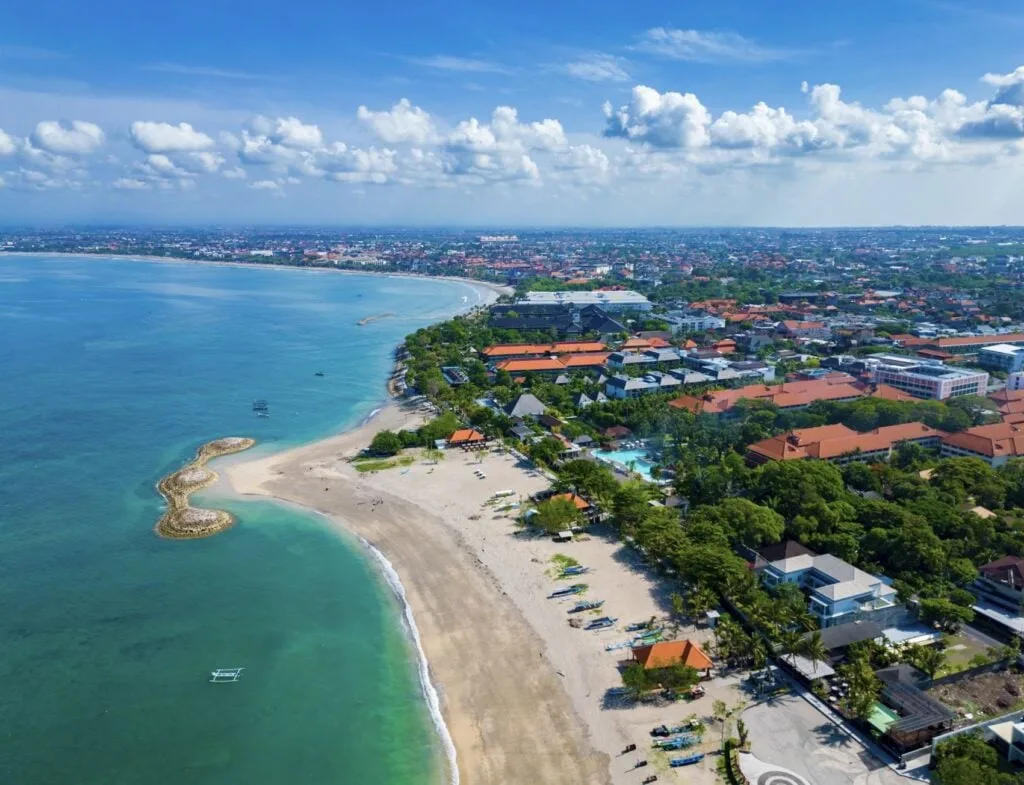
Are you crazy? Kuta is trashy!” That is the consensus from the digital nomad crowd. But while they are busy trying to look “cool” and “aesthetic” in Canggu, they are missing the logistical reality. Here is the truth: Kuta was built to be a city; Canggu was built to be a rice paddy. Kuta has massive, wide boulevards and direct access to the Bypass designed to handle thousands of cars. Canggu is trying to funnel SUVs down one-lane dirt paths meant for farmers. The result? I can drive 2km in Kuta in 5 minutes. In Canggu, that same drive takes 45 minutes of gridlock.
I am not here to look cool in a smoothie bowl cafe. I am here to live a good life and run a scalable business. I don’t have time to sit in traffic to prove I’m “trendy.” Because the herd of influencers and partiers migrated to Canggu to be seen, Kuta has ironically become the most efficient place on the island. It’s quieter, the gridlock is manageable, and the infrastructure actually works.

The Intel: Stay near the Beachwalk Mall. You get the benefits of the “Ghost Town Effect”—the massive crowds are gone, but the amenities remain. We are talking paved sidewalks (a luxury in Bali), fiber-optic internet that handles high-frequency trading, and a 15-minute straight shot to the airport.
The Trade-off: You have to deal with the “Cringe Factor.” Yes, Kuta still has the reputation of “Bintang singlets” and drunken tourists, and you will get asked for a massage every 50 feet. But frankly, I would rather ignore a hawker for 10 seconds than sit in a “cool” Canggu traffic jam for two hours.
The standard Visa on Arrival gives you 30 days, extendable once for another 30 (60 days total)—for anything longer, you’ll need the 60-day Tourist Visa.
3. Puerto Escondido, Mexico (The “Grown Up” Side)


Forget Zicatela. Unless you want to fight 20-foot waves and sleep next to a rave, that’s not the “Live in Style” vibe. The real secret for long-term living is the Rinconada neighborhood.
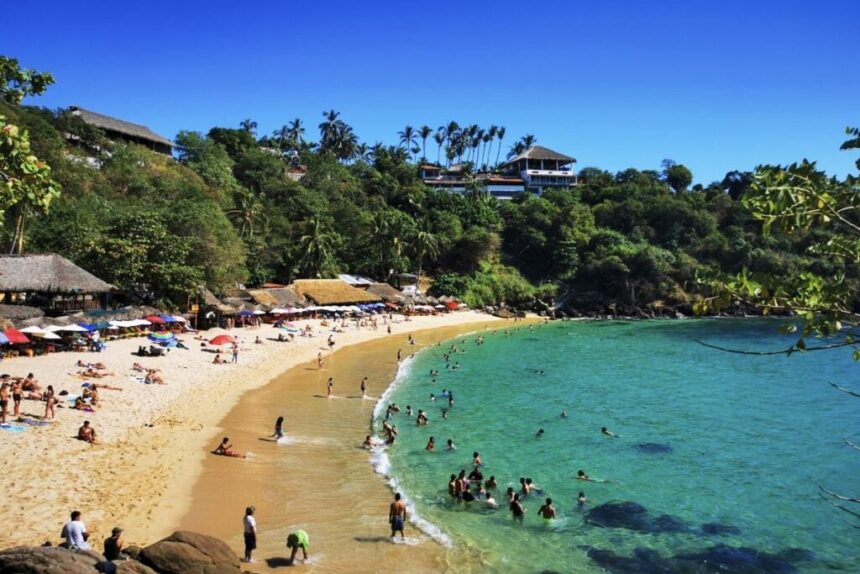
Rinconada is a quiet, upscale strip of restaurants and cafes sitting on a cliff. You live here for the peace, the AC, and the walkable “restaurant row.” The best part? You are steps away from Playa Carrizalillo.
- The Intel: You have to walk down over 150 stone steps to get to Playa Carrizalillo (which is your daily workout), but once you are down there, it is a stunning, turquoise cove that is swimmable.
- The Cost: You can find a modern apartment in Rinconada or the nearby Bacocho area for $1,200–$1,500.
Tourists can stay in Mexico for up to 180 days, but note that immigration officers have full discretion and may give you less.
4. Hoi An, Vietnam (The Ancient Value)


It’s a culture shock small town, but you are within an hour of the metropolis of Da Nang, so you aren’t isolated. Hoi An is ancient in every way—yellow walls, lanterns, UNESCO heritage sites everywhere. The value is insane. A 3-bedroom house for $1,000? Or a modern apartment with a pool for $800 bucks? You can’t beat that. You want to live near An Bang Beach to get the best of both worlds—cycling through rice paddies in the morning and hitting the ocean in the afternoon.


The Trade-off: The rainy season (Oct–Nov) isn’t just “wet”; it is a logistical nightmare. The streets don’t just puddle; they turn into rivers. I am talking waist-deep water where you might literally need a boat to get out of your neighborhood. My rule? Be sure to book second floor and up. If you don’t, the aggressive dampness and floodwaters will eat your electronics and mold your luggage. You can live like a king here, but during flood season, ensure your castle is high and dry.
The Vietnam E-Visa policy now grants citizens of all countries a solid 90-day stay, making it one of the easiest ‘medium-term’ visas to get.
5. Koh Lanta, Thailand (The Quiet Island)


If Phuket is too loud and Samui is too expensive, Koh Lanta is the sweet spot. This is where the serious digital nomads go to get work done. The island is famous for KoHub, a massive tropical coworking space with 1Gbps internet that basically guarantees you can run a business from the jungle.
There are no high-rises here. It’s flat, easy to ride a scooter around, and the beaches (like Long Beach) are empty compared to the rest of Thailand.

- The Intel: The expat community here is incredibly supportive and mature. You aren’t surrounded by 20-year-old backpackers on a gap year; you are surrounded by entrepreneurs.
- The Cost: You can find a bungalow with AC and a workspace for $600-$900, leaving you plenty of budget to eat fresh Thai curry every night.
- The Trade-off: It’s a pain to get to. There is no airport, so you are taking a minivan and a ferry from Krabi, which kills half a day. Also, Low Season (May-Oct) is a ghost town. Half the restaurants close and if you get seriously sick, the local clinics are basic; you are taking a bumpy boat ride to the mainland for a real hospital.
US citizens now enter Thailand Visa Exempt for 60 days, which can be extended for another 30 days at a local immigration office (90 days total).
6. Cartagena, Colombia (The City by the Sea)


Is it affordable? Yes. Is the Old Town magic? Absolutely. But living here is a contact sport. Most expats default to Bocagrande (the Miami skyline part), but it’s soulless traffic and wind tunnels.
The Intel: The real secret is Manga. It’s a leafy, residential island connected to the Old Town by a short bridge. It’s filled with colonial mansions, it’s quiet at night, and you pay half the rent of Bocagrande ($700-$900). You get the “Latin vibes” without the high-rise sterility, and it’s a 15-minute scenic walk to the action.


The Trade-off: The heat is a wet sauna 24/7. But the real issue is the aggression. The street vendors and “rappers” don’t just ask for money; they block your path and demand it. You need thick skin and a firm “No.” Also, a serious safety warning: Watch your drink. The risk of scopolamine (drugging) is real here. Don’t let strangers get too close, and never leave a drink unattended. This isn’t Disneyland; keep your head on a swivel.
You get 90 days on arrival, which you can easily extend online for another 90 days, giving you a maximum of 180 days per calendar year in Colombia.
7. Montañita, Ecuador (The “Peter Pan” Outpost)
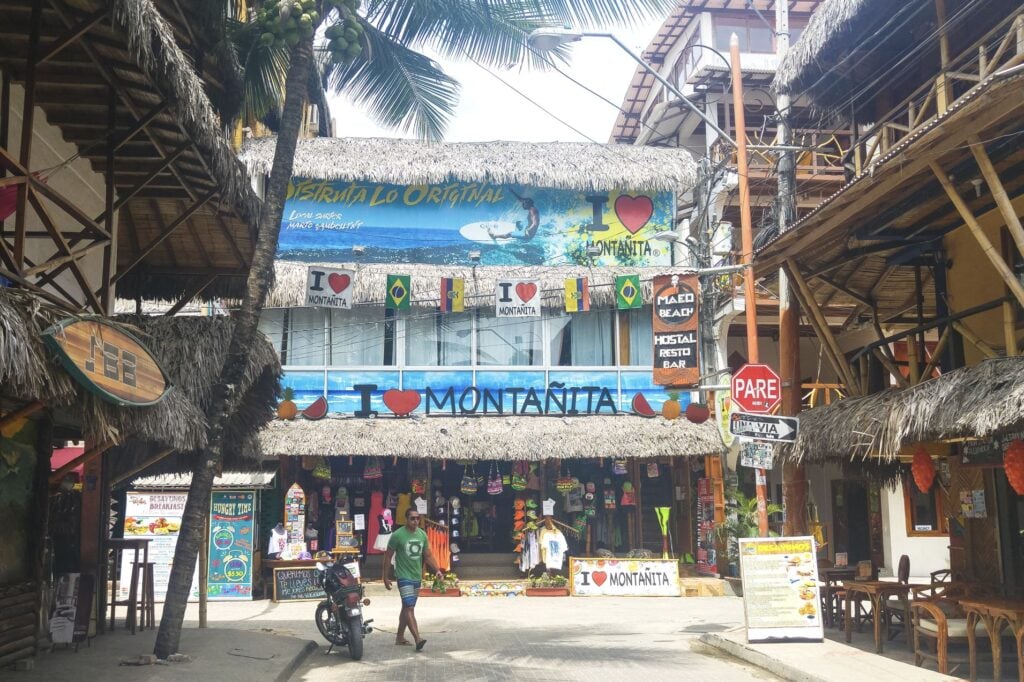
Okay, let’s be clear: If you live in the town center, you won’t sleep. The bass from the clubs shakes the walls until 4 AM every single night. The secret to actually living here is “La Punta” (The Point). This is the neighborhood at the far north end of the beach where the adults and serious surfers live. It’s quiet, chill, and you can walk to the party, but you don’t have to sleep inside it.
- The Intel: You can’t buy real groceries here. The town has minimal markets with overpriced chips and beer. For real food (cheese, electronics, quality meat), you have to take the $2 bus to La Libertad (about 45 mins away) to hit the “El Paseo” mall.


- The Cost: You can live like a king for $1,200 total. Rent in La Punta for a nice bungalow is $400-$600. Surf lessons are $15.
- The Trade-off: Infrastructure is “island time.” The power blinks when the wind blows too hard, and the internet can vanish for hours (Starlink is a lifesaver here). Also, during “Carnaval,” the town becomes a mosh pit of 50,000 people—most locals leave for that week.
You receive a free 90-day tourist stamp upon entry in Ecuador, which can be extended one time for an additional 90 days at an immigration office.
The Bottom Line
If I were to choose one place to live, work, and retire, it would be Mazatlán. The combination of authentic culture, first-world internet, and walkable oceanfront life is unbeatable. The summers might be brutal, but winters are seriously incredible.
Be sure to check the latest travel advisories and entry requirements for your destinations with our 1 minutes trip check.
Subscribe To Our Latest Posts
Enter your email address to subscribe to Travel Off Path’s latest breaking travel news, straight to your inbox.