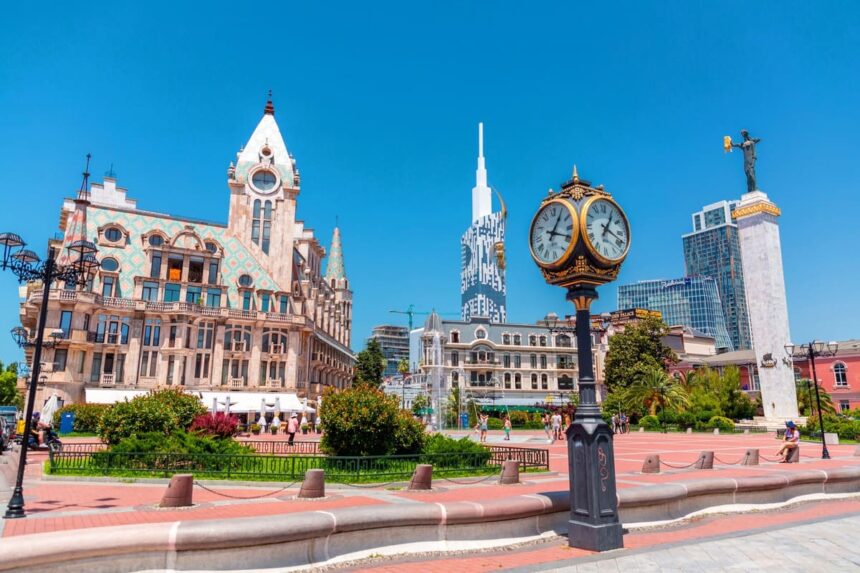
Finding yourself a cozy wee corner in a vintage café overlooking a calm cobbled street, working at a relaxed pace for a few hours as you gently sip your homemade hot chockie, because you just can’t help but slow it down a notch when you’re across the pond—all of this before hitting the local medieval castle’s ramparts for the most epic late-evening sunset.
Listen, I get it. Having worked remotely from over 100 European cities, there are very few things that feel as satisfying or intellectually stimulating as finding yourself in the Old World, surrounded by ancient stuff, and at the same time, a creative feel that’s hard to match.
Year in, year out, Europe remains the world’s premier digital nomad playground.
The Problem With Official Digital Nomad Lists
Now, you’ve probably seen the average Top Digital Nomad Destination list floating around in the blogosphere, and you might have raised an eyebrow or two at their results.
I mean, Paris is indeed gorgeous (I actually live here!), but it’s far from being tax-friendly, or affordable enough to warrant a top 5 feature.
Lisbon is all the off-season sun you can ask for, and there’s truly nothing better than oven-warm pastel de nata ahead of an afternoon siesta, but doesn’t it feel like yesterday’s news at this point? Like, aren’t nomads literally being chased out of Portugal?


And oh, don’t get me started on the Barcelona lovers. I get it, the weather is great, the Catalan beaches look like a gateway to heaven, and the sangria is out-of-this-world, but the Go Home signs everywhere and water gun antics? No, thank you.
That’s why this time, I’m not here to give you another regurgitated list of tried-and-true European nomad hubs. We’re all too familiar with their methodology, rankings, and reasoning behind rather questionable lists.
What if I gave you instead the top 4 European cities that I feel welcomed me best as a digital nomad, based entirely on my 7+ years of on-the-ground expertise?
In that case, our golden quartet would look something like this:
The 4 Digital Nomad Hotspots That Stole My Heart
Budapest, Hungary


This is perhaps the only time my personal taste, and seemingly everyone else’s, aligns: out of all the Central (or Eastern, depending on who you ask) European capitals, Budapest takes the crown as the most architecturally grand, café-packed, thermal-rich, and low-crime homebase to have.
I’m a Gen Z babe in the end, and I gravitate towards the nearest matcha or bubble tea spot, and I’m glad to report that Budapest has no shortage of those.
Places like Bubble Kingdom BP and CHÁ CHÁ (inside Westend Mall), all have laptop-friendly policies that attract a significant crowd of expats—which is great! You get to meet like-minded individuals and make friends quicker—and the snack situation is hard to beat.


In summer, there’s nowhere better to be (and socialize) than Karavan: a row of street-food trucks and stands lining long, communal wooden tables, where you can mingle with locals, and get a takeout lunch and a cold beer for around $10–$12.
On that note, Budapest is still surprisingly affordable?? Yes, it is getting progressively pricier, especially on the rent front ($848 on average for a single-person downtown loft), but to those of us used to Paris, London, or God forbid, New York prices, it’s still a steal of a deal for what you get.
Winters can be brutal, but hey, nothing a visit to a thermal bath won’t fix. Forget the overhyped Széchenyi: yes, no doubt it’s pretty, but for a local, more laid-back experience, and entry fees that match Budapest’s cost of living, try Lukacs.
1. Where are you working today?
2. Lunch break! Where to?
3. You need a thermal bath. Pick one:
Shkodër, Albania


I know, everyone else is gushing over Tirana and how quirky and vibrant and youthful it feels, but if I’m being completely honest, Albania’s most promising digital nomad hub is not its sprawling, arguably chaotic capital, but the more offbeat Shkodër in the north of the country.
With a population of around 95,000, it’s just big enough to feel lively, while retaining the small-town charm. This feeling is reinforced by a picture-perfect Old Town, with cozy coffee shops hiding behind restored façades, cobblestone lanes, and lakeside promenades.
My favorite thing about Shkodër, however, is how history and culture are a lot more accessible here compared to a modernism-dominated Tirana:


It looks like an actual European city, as opposed to your average run-down, gritty Balkan concrete jungle. It even has a monumental medieval hilltop fortress on the edge of town, for heaven’s sake!
The access to nature is yet another big plus: it’s a short drive away from the ‘Albanian Alps’, or the Accursed Mountains, known for remote villages like Theth and Valbonë, majestic waterfalls that empty into crystalline natural pools, and epic hiking trails.
Oh, have I mentioned I never spent over $8 for a meal in an Old Town restaurant here? Or that month-long Airbnb rentals average $380–$400? Or better even: Americans can stay a whole year in Albania as tourists or digital nomads, visa-free?
1. Pick your city aesthetic:
2. What is your rent budget?
3. Pick your weekend activity:
Chios, Greece
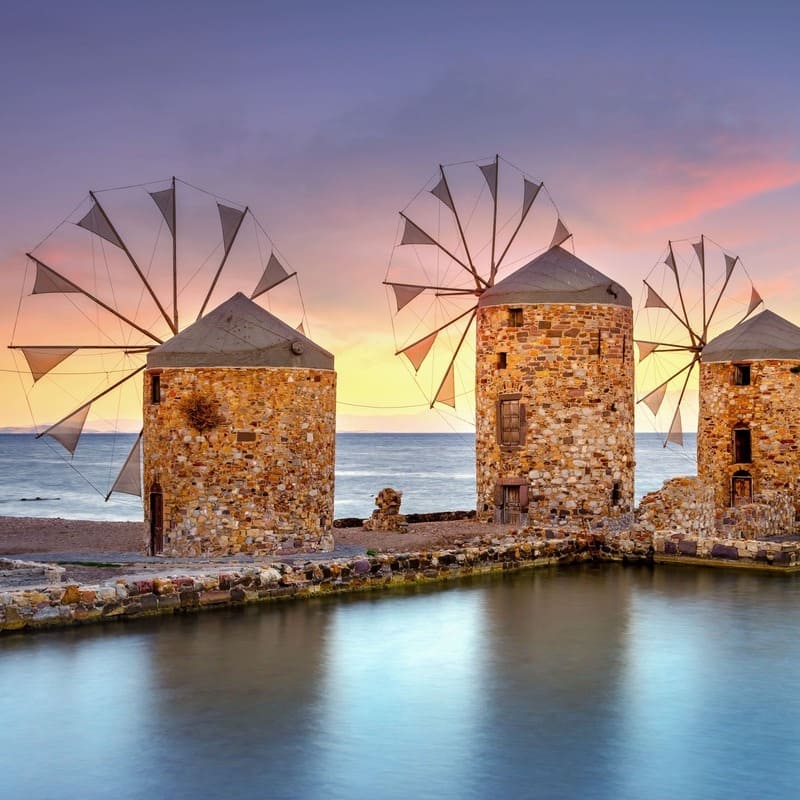

Forget Crete, Zakynthos, Rhodes: if you’re itching to soak up months of Aegean sun in Greece, beat it to overlooked Chios, Greece’s fifth-largest island.
With just domestic flights and no Ryanair hordes to crash your party, it feels way more authentic, truly unspoiled, and down-to-earth than your cookie-cutter, weekend-only Greek island that costs an arm and a leg.
No, you won’t find Santorini’s whitewashed churches with blue domes here, nor Corfu’s bustling party scene, yet if it’s slow-living, mastic groves, picturesque mountain villages, and secret coves you’re looking for, Chios is the perfect pick.


Kick it back in Chios Town, the island’s port city, packed with family-run tavernas dishing out fresh seafood, then day-trip south to Pyrgi’s mind-blowing black-and-white geometric villages, or Glaroi’s crowd-free pebbles and azure seas.
In the center of the island, the UNESCO-protected, Byzantine-era Nea Moni Monastery is a must-visit gem, while up north, Anavatos is a poignant destination for foreigners and Greeks alike: an abandoned medieval village frozen in time, wiped out by a Turkish invasion in 1822.
You could spend weeks on end in Chios and still not see it all, so I guess it’s a good thing, then, that a long stay won’t hurt your wallet. I’m talking meals for around $15 and port-side apartments from $700-per-month.
1. What is your ideal Greek vibe?
2. Pick your scenery:
3. What is your monthly budget?
Batumi, Georgia


Tucked away in the Caucasus, far away from your Central and Western European comfort zone, Georgia has actually been a digital nomad favorite for quite some time now, and for good reason.
For starters, it allows many foreigners to stay for a whole year as visitors, and if you plan on extending your stay, a one-day border run to Armenia or Turkey and back is usually enough to reset that for another full year.
Then there’s the fact that the cost of living in Georgia is on the cheaper end compared to most Eurasian countries—you can get by on roughly 550–600 USD a month, all basics included—and the food and wine are dangerously good.


It’s almost impossible to leave without putting on a few extra khachapuri-fueled pounds.
While most nomads flock to Tbilisi, Georgia’s exciting, rough-around-the-edges capital, it feels like it has seen its heyday.
Rents are climbing fast, especially with waves of political refugees settling there since the Russo‑Ukrainian War, and as great as the café scene is, there were plenty of times I found myself craving a slower, more breathable Georgian pace of life that the endless forest of Soviet-era high-rises just couldn’t provide.
That’s why I’m claiming Batumi as Georgia’s real nomad haven.


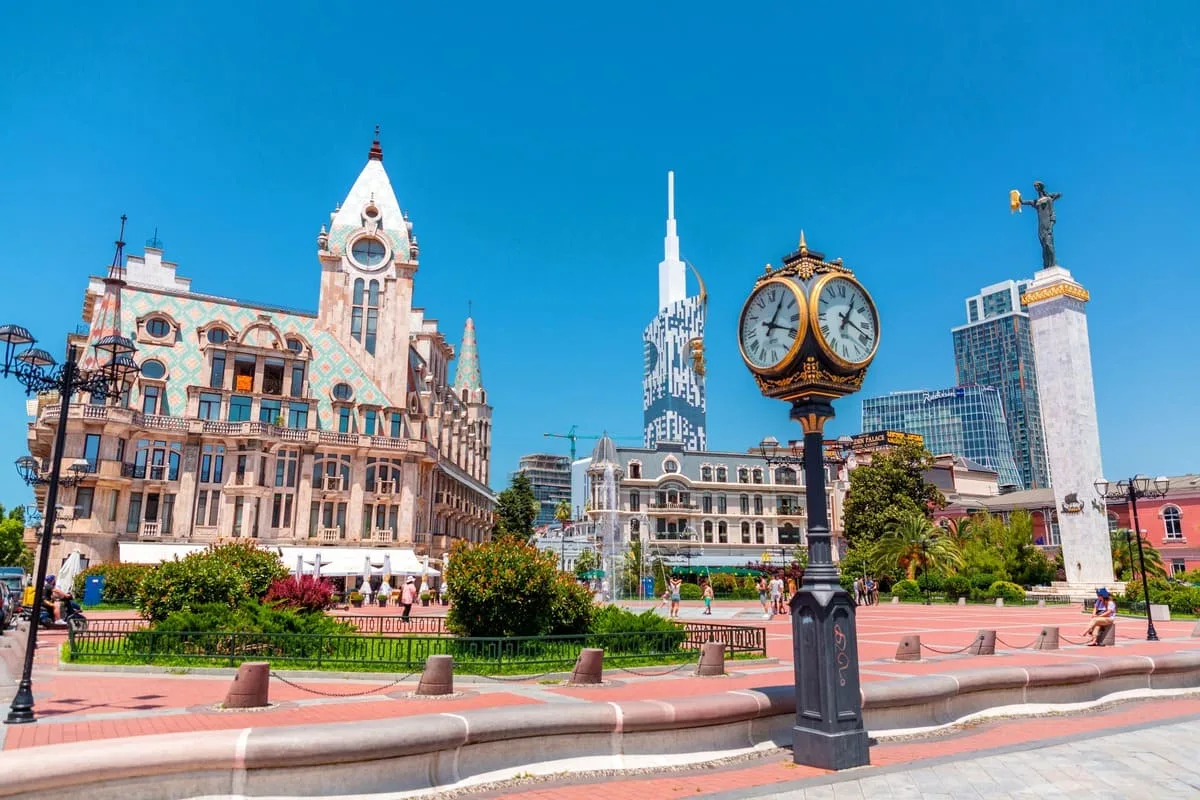
Stretching along the Black Sea, with miles of bar-backed pebble shoreline and deep-blue waters, a Dubai-inspired skyline of innovative skyscrapers, mixed with 19th‑century revivalist façades and leafy parks, Batumi feels like an unconventional mish-mash that somehow works.
It’s also about five times smaller than sprawling, 1.3‑million‑strong Tbilisi, and if mid-sized cities that don’t swallow you whole have been more your speed lately—bonus points if they’re coastal—Batumi hits that sweet spot.
On top of that, Batumi’s ace up its sleeve is its still‑affordable property and rental market: unlike the capital, it hasn’t yet been completely flooded by expats, and you can still find gorgey central apartments, within walking distance of the seafront, at genuinely competitive long‑stay prices.
Numbeo figures rarely get it wrong, and rent in Batumi is estimated to be 29.2% lower than in Tbilisi.
1. What is your preferred scenery?
2. Rent prices are climbing. You want:
3. Pick your visa strategy:

Subscribe To Our Latest Posts
Enter your email address to subscribe to Travel Off Path’s latest breaking travel news, straight to your inbox.