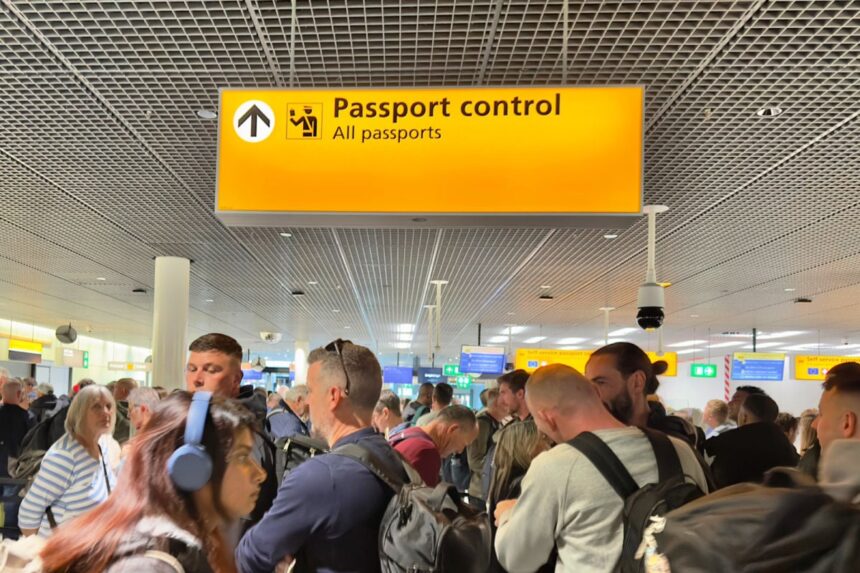
After years of back and forth, false deadlines, and rampant misinformation, this time it’s official: the European Commission has struck the hammer and confirmed 2026 is the year the controversial ETIAS launches.
If you haven’t been following the complex European bureaucracy or you’re not a Travel Off Path reader, you might have missed a massive shift… Europe is planning a major overhaul of its border system.
One that will include making Americans pay for a permit before traveling. From 2026, the dreaded moment will finally materialize, and if you’re flying across the pond in the coming year, you’d better come prepared:
What Does ETIAS Even Mean?
ETIAS stands for European Travel Information and Authorization System, and in practice, it’s a digital visa that will soon be required of all current visa-exempt travelers entering Europe as tourists.
This includes Americans, but before you feel personally attacked, it also applies to over 60 other nationalities: Canadians, Brits, Australians, Kiwis, Mexicans, and many more.
That’s the sum of it, but it gets slightly more complicated as we get into the technicalities. Obviously, Europe is a big continent, and not all European countries will be imposing ETIAS on visitors (but more on that further down).


Those that will, however, are formally part of the Schengen Area. If you’re not a frequent traveler, and you have no idea what Schengen even means, it’s a 29-country customs union, where passport checks do not apply for the purposes of cross-border travel.
Sounds complicated enough, we know, but it basically means that, if you fly from the U.S. to France, you’ll undergo a passport check.
On the other hand, taking a train from France to Belgium, or France to the Netherlands, or France ot Italy, is as smooth as crossing the state border from California to Arizona.
Sounds awesome, until you get down to the nitty-gritty of it: yes, you can travel hassle-free across a whopping 29 countries once you’re inside Schengen, as all travelers are treated as domestic arrivals, but the downside is, you only get 90 days to do it.


That’s where ETIAS comes into play:
How Does Schengen Work?
According to Schengen Area rules, U.S. passport holders may be present in the Schengen Area for no more than 90 days within any 180-day period. In short, if you’ve spent a whole month traveling across France alone, you only have 60 days left to explore the 28 other countries.
If you use up the 90 days all at once, you must then wait 90 days outside of Schengen in order to be readmitted.
Up until this year, keeping tabs on their Schengen days and how much time they had left was the only concern for American tourists in Europe. Starting in 2026, they will have the additional bureaucratic hurdle of an ETIAS request.


Fingerprinting upon arrival is also in order, but we digress.
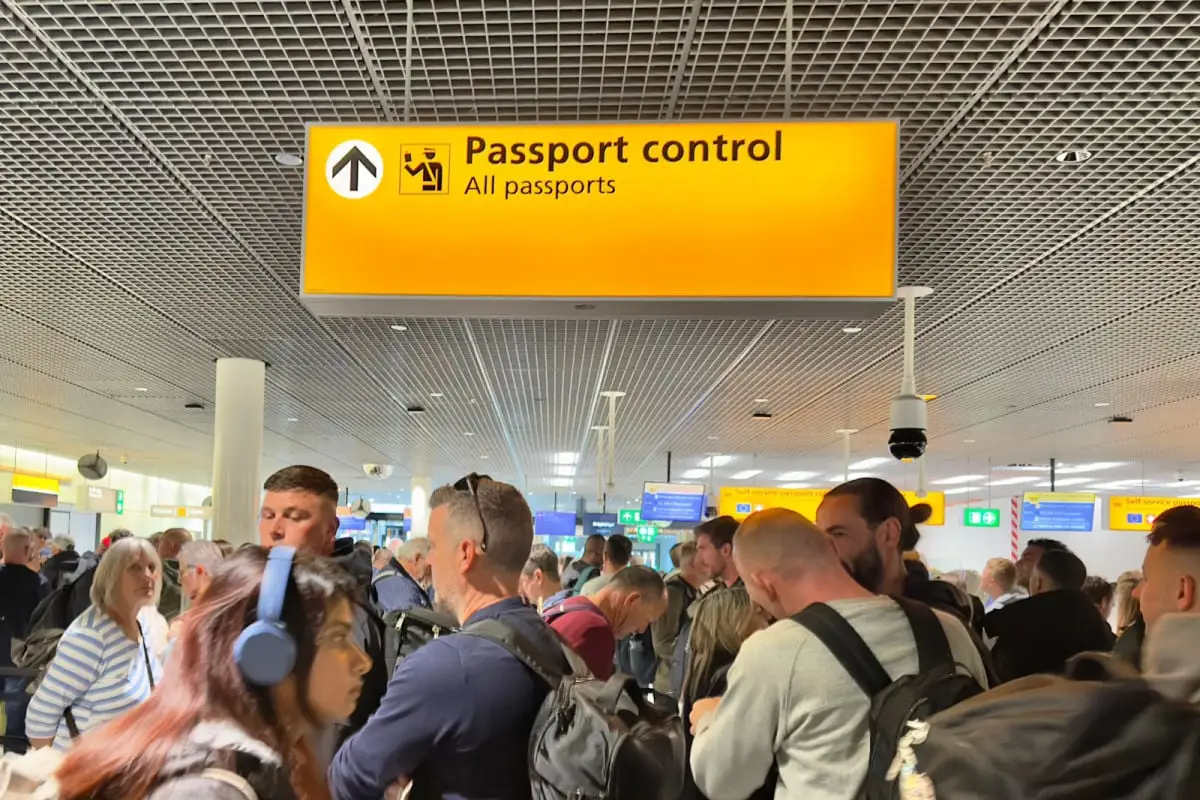
Once the new system is implemented, unless you hold a valid ETIAS, you won’t even be able to board your flight to Europe. So how will it work in practice?
How Does An ETIAS Application Work
We’ve covered the ETIAS launch at length here, but if you’re wondering how exactly you can get one, you can rest assured it’s far easier than a regular visa, and it won’t involve commutes to the nearest Consulate, nor attending in-person interviews.
For most people.


If you’re of good character, have no criminal record back home, and have never once overstayed your welcome in Europe (remember the 90-day rule?), you can apply for your travel permit from the comfort of your home.
ETIAS applications will be processed online, and it will involve:
- Creating an account on the official ETIAS platform (yet to be launched)
- Filling out an application form
- Uploading your passport photo and personal information
- Answer a series of security questions pertaining to your purpose of travel
- Pay for the ETIAS fee, currently set at €20 (While initially proposed at €7, the fee has been officially set at €20 as of late 2025 to cover rising operational costs.)
Most ETIAS requests will be processed within minutes, especially if you’re a low-risk American traveler with no previous history of breach of immigration rules or serious offenses. Some applications will be processed manually, and take longer to get approved.


That’s why we advise you that, once the system launches, you don’t leave it until the very last minute to submit your ETIAS application. Approval can be issued within seconds straight to your email, or take up to 30 days, if additional information and documents are required.
The ETIAS platform is not yet launched, so beware of online scammers offering ETIAS advice and application support. We will let you know exactly when it launches, sometime in the last quarter of 2026. That’s the estimated deadline, as an official date has not yet been confirmed.
Which Countries Will Require ETIAS?
- Austria
- Belgium
- Bulgaria
- Croatia
- Cyprus
- Czech Republic
- Denmark
- Estonia
- Finland
- France
- Germany
- Greece
- Hungary
- Iceland
- Italy
- Latvia
- Liechtenstein
- Lithuania
- Luxembourg
- Malta
- Netherlands
- Norway
- Poland
- Portugal
- Romania
- Slovakia
- Slovenia
- Spain
- Sweden
- Switzerland


An ETIAS will be valid for up to 3 years from the date of issuance, or until your current passport expires, if it’s due to run out sooner. It will enable you to continue to travel to the Schengen Area for 90 days (within a 180-day period) once the border changes are enacted.
Which Countries Will Not Require ETIAS
All countries that are not in the Schengen Area, nor legally obligated to join the Schengen Area in the near future, are not affected by the changes. American tourists are still welcome under the current visa rules, which typically mean stays of up to 90 days in each individual country, except where noted:
- Albania
- Andorra*
- Armenia
- Azerbaijan
- Belarus
- Bosnia and Herzegovina
- Georgia
- Ireland
- Kosovo
- Moldova
- Monaco
- Montenegro
- North Macedonia
- Russia
- San Marino*
- Serbia
- Turkey
- Ukraine
- United Kingdom*
- Vatican City*


Notes:
- Andorra is not part of the Schengen Area and has kept a hard border with Spain, but as there is no way to get to Andorra without first flying to Spain, an ETIAS or valid multi-entry Schengen Visa, for non-ETIAS eligible travelers, will be required.
- San Marino and Vatican City are not formally part of the Schengen Area, but they are surrounded by Italy, which is a Schengen state, and do not maintain an active border. For that reason, if you’re heading to these micro-states, you will still need an ETIAS as the only way to reach them is transiting through Italy.
- The United Kingdom has its own Entry Travel Authorization system in place, dubbed the UK ETA, which is separate from the ETIAS. Americans must first apply for a UK ETA in order to travel to the United Kingdom. If they’re UK ETA holders, they can stay for up to 180 days at a time as tourists.
Why This List Might Look A Little Different In A Couple Of Years


As more countries gear up to join the European Union and subsequently its Schengen Area in the future, you should expect the list to change over the years.
Cyprus, which has been an EU member state since 2004 but has lain outside of Schengen, is finally expected to ascend to the border-free area in 2026. Naturally, it will start enforcing ETIAS rules once it’s officially in Schengen.
Additionally, EU candidate state Montenegro is aiming to join the bloc soon, and others like Albania and North Macedonia are expecting to ascend within the next few years.
In Montenegro’s case, should negotiations prove successful (and lately they’ve been accelerated), Americans will also need to obtain the ETIAS permit if they wish to visit Montenegro as of 2027.
Is The U.S. Passport Becoming Weaker In 2026?


In short, yes, unfortunately.
It’s a rapidly changing world, and if you think complex border rules were a thing of the past as much as COVID, you’re in for a big surprise.
Between new visa requirements, Entry Travel Authorizations, and mandatory forms, international travel is becoming just a tad bit more complex as we enter 2026. It sure doesn’t help that, as of the latest visa switch-ups, the U.S. passport keeps getting weaker.
In practical terms, it’s becoming increasingly less smooth to explore the world as an American.
That’s why we launched this year the TOP Entry Requirement Checker to help you plan ahead and stay up to date as entry rules get tightened (or relaxed) worldwide. Safe travels in 2026, and remember, always double-check any existing visa requirements ahead of planning a trip!

Subscribe To Our Latest Posts
Enter your email address to subscribe to Travel Off Path’s latest breaking travel news, straight to your inbox.