The final couple of exhibits that I’ve seen by Avenir, the Berlin-based zero waste upcycling model by Sophie Claussen and Maximilian Luers, took quotidian actuality and made an enthralling factor of it: a metropolis life tableaux held outdoors the place you didn’t know at first who was strolling the present and who was simply strolling down the road, whereas one other took a extra standard runway format, however did it with the chattering informality of an awesome e-book social gathering—you realize, the cool crowd who’re doubly cool as a result of they really learn.
This previous July, as a substitute of staging one other present throughout Berlin Trend Week, Luers walked me via some key seems to be in an set up setting, and defined they had been going to current spring 2026 for gross sales throughout the Paris collections and shoot a lookbook someday over the summer season. If some younger manufacturers may need seen that as a slip backwards after the adrenalin (and possibly additionally, let’s be trustworthy, ego) rush of dwell exhibits, not him, and never Claussen: Avenir is a model that likes to maintain it actual and discuss it actual. They’re considering making issues that final, they usually need to final—and there’s a refreshing pragmatism about what it’d take to get there.
For spring, then, Luers defined, they’d dubbed the gathering TALIS, after talisman, with all that means: one thing of lasting worth and which means which consistently brings slightly magical pleasure. Luers and Claussen had been additionally, he stated, seeking to the work of early Twentieth-century feminine sculptors, just like the German Renée Sintenis. After all, there’s the prizing of feminine creativity and expertise amidst the male dominated annals of artwork historic ‘value’ occurring right here, but there was additionally a extra direct connection for Luers. “We had this concept of utilizing the material like clay, one thing very pure in its utility for type and quantity,” he stated. “We had been interested by the pureness of the supplies we had been utilizing, even when they’re on a regular basis, to make one thing distinctive and excellent and elaborate.”
A working example: Constructing on the denim embroidery approach that that they had began doing final fall. Primarily, that had meant chopping strips of outdated, worn denim, stitching them onto a garment in bias or criss-cross striations, although for spring, he stated, the concept was to go extra fluid, leading to a body-skimming tank, a lean skirt with fraying edges, or a costume (lengthy and brief). All had been constructed out of the upcycled denim constructed onto a base cloth which dissolves in water leaving solely the fragile however sturdy denim behind. It’s an awesome concept, creating items which really feel, with the sleight of hand from the disappearing base, gentle and ethereal—and likewise particular, a memento.
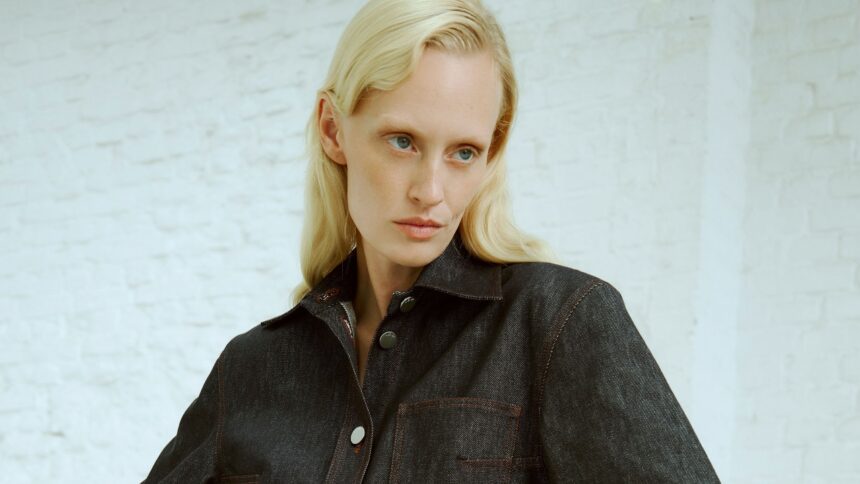
Elsewhere, Avenir supplied a distillation of a recent wardrobe of clothes which is grounded however can fly a bit with creativeness too: “sturdy and useful,” Luers stated, “but additionally with particular particulars.” They do nice trenches, this time round in ice blue, a gauzy softness to it, whereas one other was sturdy stone bonded cotton. There have been outsized shirts, together with one, denims jacket model, in pink drill, with a really bricolage impact of a black and white photograph portrait of Sintenis patched onto it, a tad stylish but additionally punkish in spirit.
Vast pants got here in silken emerald inexperienced or uncooked denim with round seams tracing their legs. And, one other trademark of theirs, roomy, shrug-it-on blazers, adorned with their signature steel pin which seems to be for all of the world like a tuning fork. Feels acceptable: that’s one technique to counsel concord when at present every little thing is so discordant and chaotic. Avenir could also be on the quieter aspect as a label, however in our ever extra clamorous period, that’s a high quality to not be underrated.