Rahul Mishra has been experimenting with off-calendar shows of late. Precisely a 12 months in the past, he celebrated the arrival of his AFEW line (Air, Fireplace, Earth, Water) at Saks Fifth Avenue in New York. This season, on the eve of Paris Style Week, he took the gathering to Dubai.
“I all the time look as much as Paris, however at this stage, it’s an excessive amount of strain to take action many vogue exhibits, and just a few huge manufacturers can handle it,” he stated throughout preparations for a trunk present of about 30 items. “It takes months of preparation. This format is a little more stress-free, and it offers me an opportunity to work together with folks—from a enterprise facet, it’s vital to know the market.”
Working example: His almost 7,500-square-foot Mumbai retailer racked up $1 million in gross sales throughout its first month, spanning couture, ready-to-wear, and limited-edition sequined luggage. “As a model, we wanted to start out recognizing the true energy of affection on your work,” he stated.
The aim of AFEW is to be “quietly revolutionary.” His spring 2026 assortment, titled FRESH (Acquainted, Reimagined, Evolving, Easy and Human—Mishra can’t resist an acronym), mines the poetry of madras, certainly one of India’s most humble textiles. “It’s one of the best material for an Indian summer time, and the southern a part of India is all about infinite summer time,” he quipped. The textile has an intriguing trajectory. Initially an reasonably priced on a regular basis sarong material, it climbed the worldwide ladder to European fits, American workwear, and old-money nation membership classics.
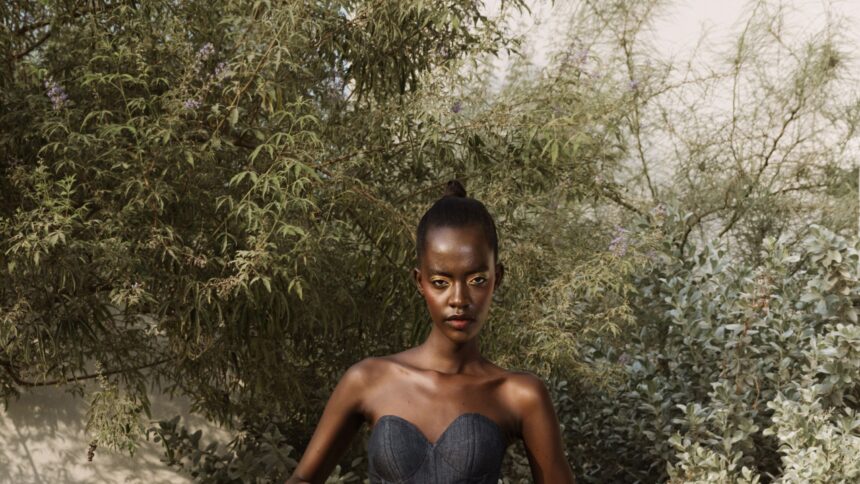
“My query was the right way to make it surprising and new,” Mishra stated. His reply lay within the particulars. The gathering reimagined the modest, handwoven theme in basic cotton and organza, fused with concepts extrapolated from his couture assortment through beading, pleating, and quantity. The dialogue between humble and haute emerged in pouf skirts crafted from hand-loomed materials paired with silk, stripes, lace, or corseted bustiers. Silver, sequins, and textural performs—intricately embroidered dragonflies on hoodies, lace hummingbirds on tees—have been meant to maintain the narrative from day to night.
Pure irregularities and “the quiet presence of the maker” have been notably evident in a black-and-white–striped ensemble in handmade khadi, a fabric symbolic of India’s independence motion. Right here, then, is craft as philosophy. “I could get credit score for the model, but it surely’s actually a narrative about neighborhood,” Mishra defined, noting that 2,000 embroiderers work together with his firm.
And therein lies his tackle the way forward for the business. “Luxurious will stay in merchandise which might be as sluggish as attainable and undergo human arms,” he stated. “To me, that’s the reply.”