Throughout Qualcomm’s Snapdragon Summit 2025, I had the prospect to take a seat down with one of many firm’s executives to speak about wearables.
Dino Bekis is the VP & GM of Wearables & Combined Sign Options at Qualcomm. Our wide-ranging dialogue included an in-depth have a look at two of the most important weaknesses of in the present day’s smartwatches: battery life and charging.
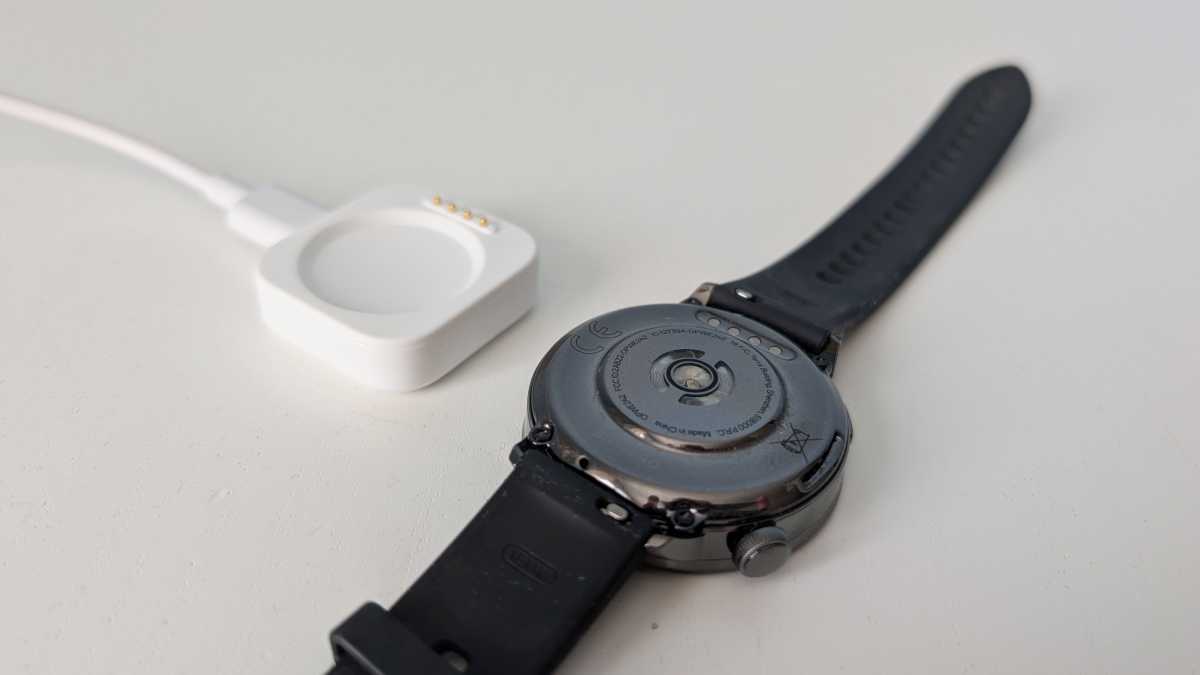
At present, most watches operating Google’s Put on OS can solely final one full day on a single cost, whereas a wide selection of proprietary infrastructure makes charging a nightmare.
Bekis confirmed that longer battery life was a goal for Qualcomm:
“Folks wish to have this idea of tremendous superior efficiency and functionality, and I additionally wish to have a three-week battery life. From our perspective, with the ability to get to one thing that’s most likely nearer to every week is an effective goal.”
Present options on Snapdragon processors declare as much as 100 hours, which is within the three-to-four-day vary. Bekis reiterated that seven days is a very good goal “with none equivocation or quibbling”.
Chris Martin / Foundry
So, how can we get there?
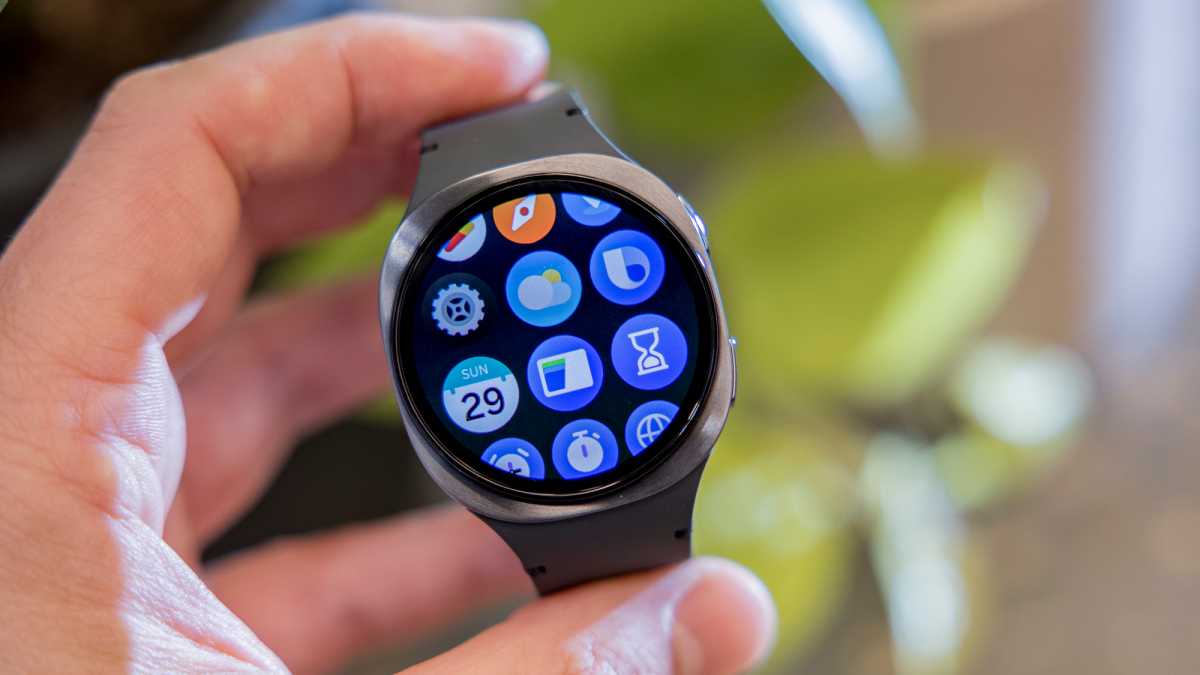
Qualcomm performs an enormous function in bettering smartwatch battery life. Its chips are on the coronary heart of most Put on OS watches, to allow them to have an enormous bearing on stamina.
Bekis defined how the corporate is working in direction of the seven-day aim:
“We have a look at course of node as a technique to, perhaps extra of a brute power method, to attempt to drive energy consumption down. The opposite issues we have a look at are what can we offload, what are {hardware} accelerators, we are able to placed on that require much less principal CPU complicated overhead?”
He defined that the less instances the principle processor must get up to carry out a perform, the higher.
Dominik Tomaszewski / Foundry
“That’s tightly coupled with once we work with the parents at Google on Put on OS or on Android. What are the issues that we are able to do within the working system in order that we are able to make the most of these {hardware} offload options that we’re constructing in?”
He added that the corporate appears to be like at typical use circumstances so as to optimise the issues folks wish to do with a smartwatch day-after-day.
How lengthy will it take?
It’s a future all of us need, however Bekis indicated that the week-long Put on OS battery life dream would possibly take some time to grow to be a actuality:
“One of many issues that we like to make use of is a determine of advantage. As you go technology to technology, you ought to be perhaps a doubling of battery life. And that could be kind of the theoretical most. However once you have a look at what we’re doing, I believe we’re very near with the ability to get to perhaps a five-day battery life by a mixture of all this stuff I discussed.”
“I believe we’re very near with the ability to get to perhaps a five-day battery life”
“And I believe that will be an enormous step ahead, particularly for a high-function watch. And even with {hardware} designs, there’s a number of iterations you may have on the software program to enhance it.
“So, essentially the most aggressive I’d say is perhaps two to 3 years, relying on how issues go. Possibly essentially the most conservative perhaps you already know 5 to 6 years, however I believe it’s measured inside that form of slender window the place we are able to get to 6 to seven day battery life for typical use circumstances.”
What about charging?
I additionally requested Bekis about charging as a result of it’s such a ache level of smartwatches in the meanwhile. With so many requiring their very own proprietary chargers to energy themselves in any respect, it’s the rationale I didn’t carry a smartwatch to the summit.
Mattias Inghe
He foresees a future the place that is much less of a problem:
“I believe it’s transferring to wi-fi charging. I do. You recognize, the times of the four-pin and three-pin connector and all these are completely different shapes, I imply, that’s beginning to go away. Once you have a look at what Samsung’s finished with a bit little bit of magazine block or MagSafe charging the place it snaps in magnetically, I believe that’s a very good step ahead.”
“However wi-fi charging is the place it’s going to finish up; it’s simply pure and all the pieces will converge. The effectivity, the timing, I believe we are able to get everybody there shortly.”
“It’ll feed on itself the place shoppers will say, hey, I don’t wish to have 14 units I’ve to plug in, I simply wish to usher in one factor, it’s going to be a pad, I’m going to place my stuff on the pad and so they’ll simply cost.”
“I’d prefer to consider it’s going to occur within the subsequent 5 years, however you already know what they are saying about predictions, proper? They by no means occur as quick as you need.
There you’ve it. Nice Put on OS battery life and easy charging is inside attain, however you might need to attend for a number of extra years.
Don’t wish to wait? In our complete greatest smartwatches information, the fashions that don’t run on Put on OS or Apple’s watchOS usually provide for much longer battery life.
Qualcomm paid for my journey, airfare, and meals to journey to its Snapdragon Know-how Summit. The corporate didn’t ask for or exert management over Tech Advisor’s content material, together with how this interview was reported.